
Shipping a vehicle across the country does not need to be complicated.
Professional auto transport services coordinate carrier networks, pickup schedules, and delivery logistics so vehicles move safely from one location to another.
At DQ Trans LLC, the process focuses on three main stages:
Request a quote
Schedule vehicle pickup
Receive your vehicle at delivery
Understanding each step helps you plan your shipment and avoid unnecessary delays.

The Vehicle Shipping Process
Every vehicle shipment begins with a quote request.
During this stage you provide basic information about the shipment:
Pickup location
Delivery destination
Vehicle make, model, and year
Vehicle condition (running or non-running)
Preferred shipping method (open or enclosed)
Once the request is submitted, logistics specialists review the details and calculate the estimated cost.
Several variables affect the price of auto transport:
Distance between pickup and delivery locations
Vehicle size and weight
Transport method (open vs enclosed)
Time of year and shipping demand
Pickup and delivery accessibility
Longer routes usually lower the price per mile, while short routes tend to cost more per mile due to fixed operating expenses.
Customers typically choose between two primary transport methods:
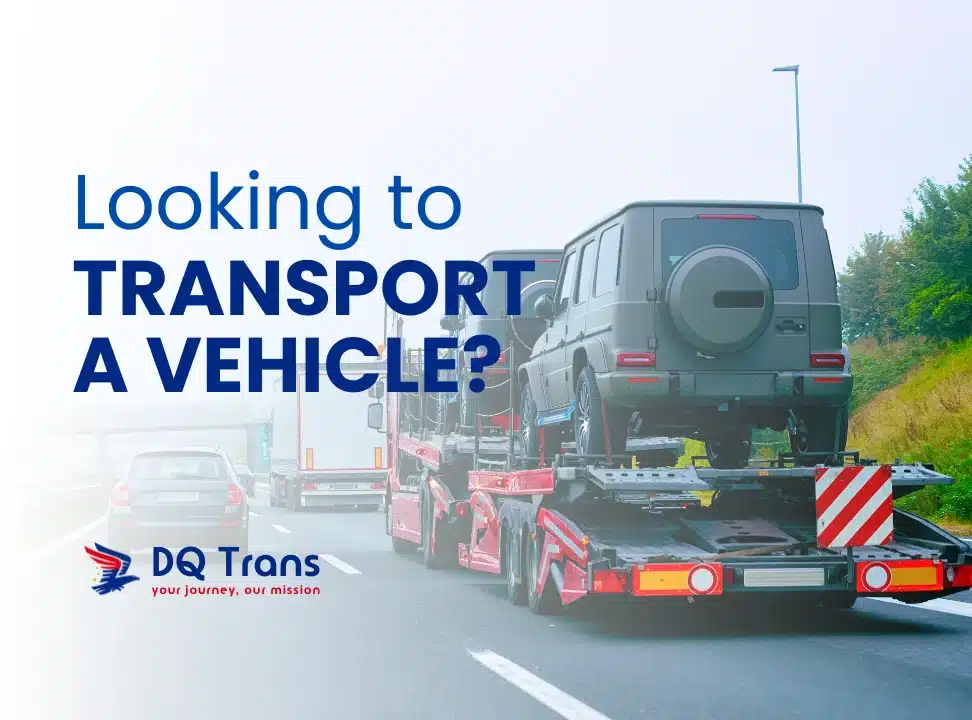
The most common and economical shipping option. Vehicles are transported on open trailers similar to those used to deliver cars to dealerships.
Provides additional protection from weather and road debris. Often used for luxury, classic, or high-value vehicles.
The Vehicle Shipping Process
Once the shipment is confirmed, the logistics team identifies a qualified carrier from a network of professional drivers.
Auto transport companies often operate as logistics coordinators that connect customers with licensed transport carriers.
After a carrier accepts the shipment, the customer receives:
Carrier contact information
Estimated pickup window
Shipping details
Pickup dates are usually scheduled within a time window rather than an exact time, since drivers operate on routes that include multiple shipments.
Before the carrier arrives, vehicle owners should complete a few preparation steps:
Remove personal belongings from the vehicle
Ensure the fuel level is around ¼ tank
Disable alarms if necessary
Document the vehicle condition with photos
These steps help prevent delays and provide documentation before transport begins.


The Vehicle Shipping Process
When the driver arrives for pickup, a vehicle inspection takes place.
Both the driver and the vehicle owner review the condition of the car and record it on a Bill of Lading (BOL).
The Bill of Lading serves as:
The official shipping contract
A condition report
The delivery receipt
Once the inspection is complete, the driver loads the vehicle onto the carrier trailer and begins the shipment.
The Vehicle Shipping Process
During transit, your vehicle is transported along the carrier’s route.
Most carriers transport multiple vehicles on the same trailer, which helps reduce overall shipping costs.
Transit time varies depending on several factors:
Distance of the shipment
Route demand
Weather conditions
Traffic and road restrictions
Cross-country shipments typically take several days, while shorter regional shipments may take only a few days.
Communication with the driver or logistics team allows customers to receive updates regarding the shipment status.


The Vehicle Shipping Process
When the vehicle approaches the destination, the driver contacts the recipient to schedule delivery.
Delivery typically occurs at:
The provided address
A nearby accessible location if the truck cannot access the street
Upon arrival, the vehicle undergoes another inspection.
The recipient compares the vehicle condition with the original Bill of Lading and confirms delivery.
After inspection, the Bill of Lading is signed to complete the shipment.
Most vehicle shipments today use door-to-door transport.
This means the carrier picks up and delivers the vehicle as close as possible to the specified addresses.
If large trucks cannot safely access the exact location, the driver may arrange a nearby meeting point such as:
Large parking lots
Commercial areas
Wide residential streets
Door-to-door shipping eliminates the need to transport the vehicle to a terminal facility.
Auto transport services are used to ship many different types of vehicles.
Common shipments include:
Standard cars and SUVs
Luxury vehicles
Classic and collector cars
Motorcycles
Fleet vehicles
Non-running vehicles
Specialized equipment or trailers may be required depending on the vehicle condition.

Your questions answered

Auto transport follows three main steps: request a quote, schedule vehicle pickup, and receive the vehicle at delivery.
Prices vary depending on distance, vehicle size, transport type, and seasonal demand. Quotes are calculated individually for each shipment.
Open transport is the most economical option. Enclosed transport provides additional protection and is often used for high-value vehicles.
Yes. Either the vehicle owner or a designated representative should be present to inspect the vehicle and sign the Bill of Lading.
Yes. However, specialized equipment may be required for loading, which may increase shipping costs.