
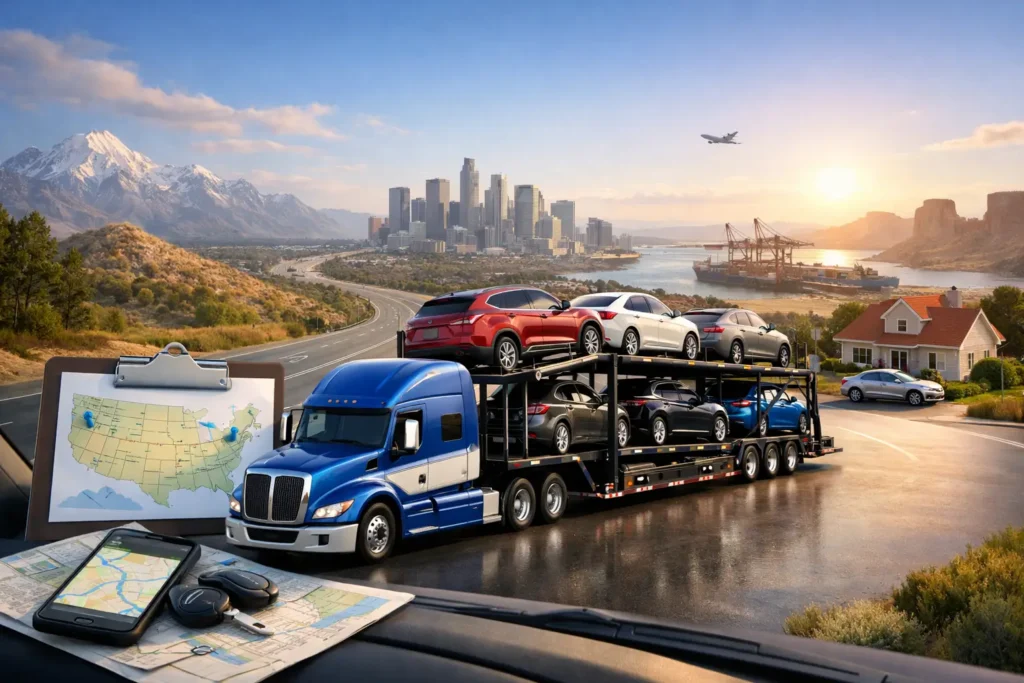
A coast-to-coast drive can add thousands of miles, several days, fuel costs, lodging, and unnecessary wear to your vehicle. This cross country car shipping guide explains how professional auto transport works, what affects your schedule and price, and how to prepare for a confident door-to-door shipment.
For a military PCS move, college relocation, seasonal travel, online vehicle purchase, dealership transfer, or family move, shipping the vehicle separately often makes the larger transition easier to manage. The key is choosing the right transport option, providing accurate vehicle details, and working with an FMCSA-licensed coordinator that communicates clearly from dispatch through delivery.
How Cross Country Car Shipping Works
Cross country auto transport is a coordinated carrier service, not a one-size-fits-all delivery route. Once you request a quote, the transport team reviews your vehicle, pickup and delivery locations, preferred timeframe, running condition, and trailer preference. Those details help match the shipment with a qualified carrier traveling the appropriate route.
Most vehicles move on multi-car trailers. This is the standard and most cost-effective method for sedans, SUVs, pickups, and many daily drivers. The carrier contacts you before pickup and delivery to coordinate a safe, accessible meeting location. When residential streets have low branches, tight turns, weight restrictions, or limited space for a large truck, a nearby wide street, shopping center, or other agreed location may be the practical solution.
At pickup, the driver completes a vehicle condition report, commonly called a bill of lading. You and the driver should review the exterior condition together and note existing marks or damage. A similar inspection takes place at delivery. This simple process creates a clear record and helps protect everyone involved.
Timing depends on lane demand, weather, carrier availability, distance, traffic conditions, and the type of trailer required. Cross-country trips generally take several days, but a professional transport coordinator should provide a realistic pickup window and keep you informed as the shipment progresses. Avoid planning around a fixed delivery moment unless you have flexibility built into your schedule.
Choose the Right Trailer for Your Vehicle
The right shipping method is based on your vehicle, budget, and comfort level. Open transport is the most common choice. Your vehicle is secured on an open carrier alongside other vehicles, making it an efficient option for standard cars, trucks, and SUVs. It is the same type of equipment frequently used to move new vehicles to dealerships.
Enclosed transport places the vehicle inside a covered trailer. It is often preferred for luxury, exotic, classic, collector, or high-value vehicles that need added protection from road debris and weather exposure. Enclosed service typically costs more and may have less frequent carrier availability on some routes, so advance planning is especially useful.
A third decision is whether you need standard or expedited service. Standard shipping provides the broadest carrier pool and is usually the best fit when your dates are flexible. Expedited transport can prioritize faster dispatch when time matters, but it is subject to carrier availability and generally carries a higher cost. A reputable company will explain the trade-off plainly rather than promising a pickup or delivery date it cannot control.
If your vehicle does not run, disclose that at the start. Inoperable vehicles can be shipped, including auction purchases from Copart, IAA, Manheim, ACV Auctions, and ADESA, but the carrier may need a winch-equipped trailer. Accurate information prevents avoidable delays at pickup and helps ensure the correct equipment is assigned.
What Determines Your Cross Country Car Shipping Cost?
Distance matters, but it is only one part of the quote. A long route between major metropolitan areas may be easier to service than a shorter route involving remote locations. Seasonal demand also affects pricing. Snowbird routes, holiday periods, severe weather, and high-volume moving seasons can change carrier capacity and market conditions.
Vehicle size and weight affect trailer space. A large SUV, lifted truck, dually pickup, or oversized vehicle may require more room than a standard sedan. Trailer type, vehicle condition, pickup accessibility, and the urgency of your request also factor into the final transport rate.
The most useful quote is based on complete, accurate details. Provide the year, make, model, vehicle condition, pickup and delivery ZIP codes, desired availability dates, and any modifications that affect height, length, or weight. If you are shipping an electric vehicle, luxury vehicle, motorcycle, RV, boat, or heavy equipment, say so early. Specialty shipments require equipment and planning that differ from a standard auto carrier.
Price should not be the only deciding factor. Ask whether the company is properly licensed, bonded, and FMCSA-compliant; how carrier insurance is verified; what communication you can expect; and whether the quoted service matches your actual vehicle and route. Clear answers before booking reduce surprises later.
Prepare Your Vehicle for Transport
Preparation is straightforward, but it matters. Clean enough of the exterior to make the inspection easy, then remove personal belongings and loose accessories from the vehicle. Auto carriers are arranged to transport vehicles, not household goods, and personal items can create weight, safety, and coverage concerns.
Keep the fuel level low, usually around one-quarter tank or less, so the vehicle can be loaded and unloaded without adding unnecessary weight. Make sure the battery is accessible and the tires are properly inflated for loading. If there are special starting instructions, an alarm, a low-clearance concern, or a feature the driver should know about, communicate it before pickup.
Before the carrier arrives, take date-stamped photos from several angles. Photograph the exterior, wheels, glass, and any existing damage. Keep a copy of the bill of lading and inspect your vehicle again before signing at delivery. If you see a concern, document it with the driver at that time rather than waiting until after the carrier has left.
Avoid Delays With Clear Communication
The fastest way to complicate a shipment is to provide incomplete information. Let your transport coordinator know if your pickup date changes, the vehicle becomes inoperable, access conditions are limited, or another person will release or receive the vehicle. The carrier needs working phone numbers for the pickup and delivery contacts.
Be prepared to meet the driver within the scheduled window or arrange a trusted adult to do so. Drivers operate under hours-of-service rules and coordinate multiple vehicle deliveries, so quick communication helps keep the route moving safely. Flexibility with pickup and delivery locations can also make a cross-country shipment easier, particularly in dense city centers or rural areas.
DQ Trans LLC coordinates nationwide vehicle shipping through a carefully vetted network of professional carriers, with door-to-door service, 24/7 dispatch support, and clear updates throughout the transport process. Whether you are sending one family vehicle across state lines or coordinating multiple units for a dealership or fleet, the same fundamentals apply: accurate details, appropriate equipment, documented inspections, and responsive communication.
Questions to Ask Before You Book
Before confirming transport, make sure you understand the service you are receiving. Ask whether your shipment is open or enclosed, whether the vehicle requires special loading equipment, what pickup and delivery windows are expected, and how updates will be provided. Confirm the payment terms and review the condition-report process so you know what happens at both ends of the trip.
You should also ask about insurance documentation and carrier qualifications. Professional auto transport involves multiple moving parts, but it should never feel unclear. A knowledgeable coordinator will explain the process in plain language, set reasonable expectations, and stay available when your plans change.
A cross-country shipment works best when it is planned early, but even short-notice moves can be handled with the right information and realistic expectations. Start with an accurate quote, choose the protection level that fits your vehicle, and keep communication open. That gives your vehicle a safer, more controlled path to its next destination while you focus on arriving there with less stress.