
Quick answer
Terminal to terminal car shipping means you drop your car at a carrier’s storage lot or port near the origin and collect it from another terminal near the destination, instead of door pickup and delivery.
Watch the clock at the lot: one Hawaii ocean carrier charges $25 per day for vehicles left beyond the free storage period, and fees must be paid before release (Pasha Hawaii).
You see a terminal quote that is lower than door-to-door and wonder why anyone pays more. Then you notice the terminal is 60 miles away, open weekdays only, and charges storage after a few days.
Door-to-door has become the default for mainland auto transport, while terminals remain essential for ocean routes to Hawaii, Alaska and Puerto Rico. Knowing which applies to you saves money and time.
This guide explains how terminal to terminal car shipping works, what it really saves, which fees to expect and when ports beat door service. You will finish with a quick rule for choosing between them.
What is terminal to terminal car shipping?
Terminal to terminal car shipping is a service where the car is handed over and collected at fixed storage facilities rather than at your home. The carrier moves it between terminals on its regular route.
The typical process:
- Book and receive the terminal address and hours.
- Drive the car to the origin terminal within the drop-off window.
- Complete inspection and sign the bill of lading with terminal staff.
- The car waits until a truck or ship on your route has space.
- Transport to the destination terminal.
- Collect the car within the free storage period, then inspect it before signing.
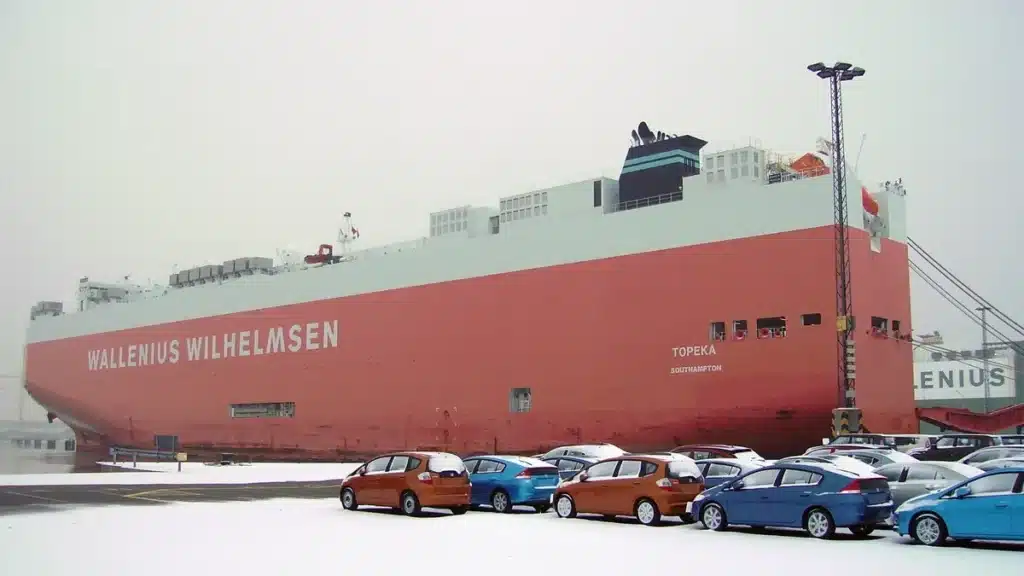
For ocean moves, the terminal is the port, and the service is called port to port. On the mainland, true terminal networks are less common than they once were. The real question is how this compares with door service.
What is the difference between terminal and door-to-door shipping?
Door-to-door service picks up and delivers as close to your addresses as a truck can legally reach; terminal service makes you travel to and from fixed lots. The trade is convenience against a possible discount.
| Factor | Terminal to terminal | Door to door |
|---|---|---|
| Pickup and delivery | At fixed lots or ports | At or near your address |
| Your travel | To both terminals | None |
| Schedule | Terminal hours | Agreed window with the driver |
| Storage fees | Possible after free time | Rare |
| Handling | Extra moves inside the lot | Car loaded once, unloaded once |
| Best for | Ocean routes, flexible schedules | Most mainland moves |
Door service is not always to the curb. Large carriers cannot enter some narrow streets, so drivers meet you at a nearby lot. Our guide to door-to-door car shipping explains how that works. Price is the main reason people consider terminals, so look at the savings next.
Is terminal to terminal car shipping cheaper?
It can be slightly cheaper on paper, but the savings often shrink once you add the drive to each terminal, rideshares home and any storage fees. Run the full math before choosing.
Add these costs to a terminal quote:
- Travel to the origin terminal, plus your ride home.
- Travel to the destination terminal to collect the car.
- Storage fees if the car arrives before you can collect it.
- Time off work to meet weekday terminal hours.
- Extra handling inside the lot, which adds small damage risk.
Port storage can be significant. Pasha Hawaii, for example, charges $25 per day beyond free time at all ports (Pasha Hawaii). A week of late pickup can cancel a modest discount.
Compare both options with our car shipping cost calculator, and see what drives car shipping costs. Cost is only one side; timing is the other.
How long does terminal to terminal shipping take?
Terminal shipping often takes longer overall, because the car may wait at the lot until a truck or ship on its route fills. Transit time between terminals is similar to door service.
Where the extra days come from:
- Consolidation. Carriers wait to fill trucks from one lot.
- Sailing schedules. Ships to Hawaii, Alaska and Puerto Rico depart on fixed days.
- Terminal hours. Weekend arrivals may wait until Monday release.
- Your pickup date. If you are not ready, the car sits, and storage may begin.
Door-to-door shipments move as soon as a driver on your lane has space, then deliver directly. For typical transit days by distance, see how long auto transport takes. Given these trade-offs, terminals fit some situations far better than others.
When should you choose terminal to terminal shipping?
Choose terminal shipping when an ocean leg is involved, when you live very close to a terminal, or when your schedule is flexible and your budget is tight. Otherwise, door-to-door is usually the better value.
Terminal or port service makes sense when:
- You are shipping to or from Hawaii, Alaska or Puerto Rico, where ports are part of every route.
- You live near the departure port and can drive the car there yourself.
- Your pickup address is unreachable for a large truck and no nearby meeting point exists.
- You can collect the car promptly at the destination.
Door-to-door makes more sense when:
- You are moving between mainland states.
- You are flying to the destination and cannot easily reach a lot.
- The car is high-value and you want it handled as little as possible.
Ocean routes often combine both: a truck brings the car door to port, and you collect it at the island port. If you choose a terminal, preparation is slightly different.
How do I prepare my car for terminal drop-off?
Clean the car, photograph it, empty it, note the terminal’s free storage period and bring the title, registration and ID to drop-off. Terminal staff, not a driver, will inspect it.
- Confirm hours and drop-off window. Ports may refuse cars that arrive too early.
- Ask about free storage days at both terminals and the daily rate after that.
- Wash and photograph the car with date stamps.
- Remove personal items and toll tags.
- Follow the fuel limit, which is often a quarter tank or less for ocean routes.
- Keep copies of the bill of lading and terminal receipt.
Our full pickup-day checklist applies to terminals too. If convenience matters more than a small discount, our door-to-door auto transport service handles pickup and delivery at your addresses.
FAQ
Can someone else drop off or pick up my car at the terminal?
Usually yes, if you authorize them in advance. Terminals often ask for written authorization, the booking number and the person’s photo ID. Confirm the exact requirements with the terminal before the day, because rules differ between ports and private lots.
Is my car insured while it is stored at a terminal?
Coverage depends on the terminal operator and carrier contracts. Ask who is responsible while the car is parked, what the limit is and whether storage beyond free time changes coverage. Get the answer in writing before drop-off.
Do all car shipping companies offer terminal service?
No. Many mainland carriers run door-to-door only, and dedicated terminal networks have become less common. Terminal or port service is standard on ocean routes such as Hawaii, Alaska and Puerto Rico, where vehicles must pass through ports.
What happens if I cannot pick up my car on time?
Storage fees typically start once the free period ends, and they must be paid before the car is released. Tell your broker as soon as plans change. They may be able to arrange a carrier to collect the car and deliver it.
Is terminal shipping safe for luxury cars?
It can be, but each extra move inside a busy lot adds handling. For luxury or classic vehicles, door-to-door enclosed transport keeps handling to one loading and one unloading. Ask how the terminal parks and moves cars before deciding.
Summary
- Terminal to terminal car shipping trades convenience for a possible discount, and you travel to both lots.
- Savings often shrink after travel costs, weekday hours and storage fees, which can run $25 a day at some ports after free time.
- Terminals and ports fit ocean routes to Hawaii, Alaska and Puerto Rico; door-to-door is usually better value for mainland moves.
Not sure which option saves you more? Get a door-to-door quote and compare it with any terminal offer, or post your route in the comments. Next, read door-to-door car shipping explained.
References
- Ship a Vehicle: Shipping Checklists. Pasha Hawaii.
Featured image: Garitzko, Public domain via Wikimedia Commons.