
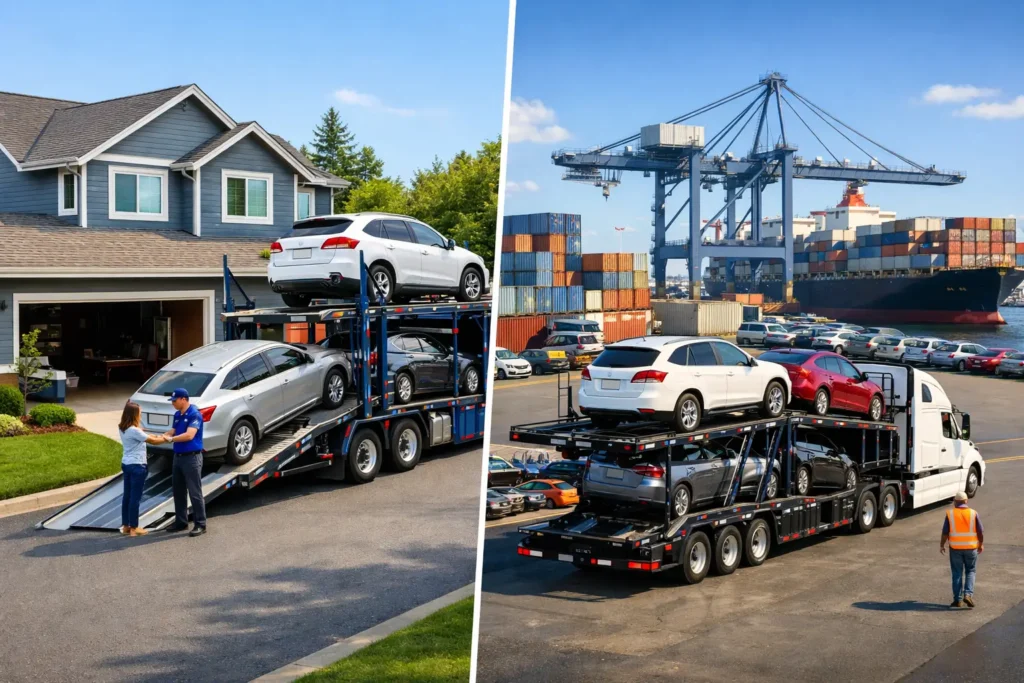
A carrier arrives near your home, office, dealership, or another agreed-accessible location and hands over your vehicle. That is the convenience many customers expect from auto transport. But when comparing door delivery vs terminal pickup, the best choice depends on more than price. Your location, schedule, vehicle type, carrier access, and comfort with coordinating pickup all matter.
For most customers, door-to-door service is the practical choice because it reduces travel, coordination, and unnecessary handling. Terminal pickup can still make sense in specific situations, especially when a residential street cannot accommodate a transport truck or when you need more flexibility around delivery. Knowing the difference upfront helps you choose a shipping plan that fits your move instead of creating last-minute complications.
What Door-to-Door Vehicle Shipping Really Means
Door-to-door auto transport means the carrier picks up and delivers your vehicle as close as safely and legally possible to the addresses you provide. It does not always mean a large truck can pull directly into a driveway, apartment complex, or narrow residential street. Auto carriers need adequate clearance for turns, overhead wires, parked cars, weight restrictions, and loading space.
When direct access is limited, the driver may arrange a nearby meeting point, such as a wide shopping center lot, fuel station, public lot, or main road with safe access. This is still considered door-to-door service because the carrier is coordinating pickup or delivery near your preferred location rather than requiring you to retrieve the vehicle from a freight terminal.
Door delivery works especially well for relocating families, military PCS customers, snowbirds, college students, online vehicle buyers, and dealerships. It is also a strong option for owners shipping luxury, classic, exotic, or inoperable vehicles, since it minimizes extra driving and transfers after transport.
How Terminal Pickup Works
Terminal pickup involves delivering your vehicle to a designated carrier terminal, storage yard, or operating facility. You then travel to that location, complete the release process, inspect the vehicle, and drive it away. Depending on the route and carrier, terminal options may not be available in every market.
A terminal can be useful when the destination is remote, the delivery address has strict access limitations, or you will not be available at the final address. It may also help if you prefer to collect the vehicle after arriving in a new area rather than coordinating a delivery window at a residence.
However, terminal pickup adds another stop to your plan. You need transportation to the terminal, enough time to inspect and collect the vehicle, and a clear understanding of its business hours and any storage policies. For customers without a local ride or those arriving by air, that extra coordination can outweigh any potential savings.
Door Delivery vs Terminal Pickup: The Key Differences
The main distinction is convenience. Door delivery brings the carrier to an accessible location near you. Terminal pickup requires you to travel to the vehicle. That difference affects cost, scheduling, communication, and the overall shipping experience.
Convenience and time commitment
Door-to-door transport usually requires less from the customer. You or an authorized adult need to be available for the vehicle inspection and release, but there is no separate trip to a terminal. This can be particularly valuable during a PCS move, a cross-country relocation, or an auction purchase where multiple moving parts are already competing for your attention.
Terminal pickup requires more personal logistics. If the terminal is across town or outside the city center, arranging a ride can take time and add expense. If your arrival date changes, you may also need to coordinate storage or pickup timing with the facility.
Cost considerations
Terminal pickup is sometimes perceived as the cheaper option, but that is not always the case. Pricing depends on the route, carrier availability, distance, vehicle size, fuel conditions, pickup and delivery access, and the type of transport requested. A terminal may reduce the need for a carrier to navigate difficult local streets, yet terminal handling and storage can introduce separate costs.
Door-to-door shipping may cost more when a location is difficult to reach or far from common carrier routes. Still, the value is often in the time and travel it saves. The right comparison is not just the transport quote. Consider the cost of getting to a terminal, time away from work, rideshare fares, and the stress of coordinating one more appointment.
Scheduling flexibility
Neither option should be treated as a guaranteed appointment at a precise hour. Traffic, weather, loading conditions, inspections, and other route factors can affect a carrier’s progress. Professional dispatch communication matters because it gives you time to plan around realistic pickup and delivery updates.
Door delivery is best when you can remain available or authorize a trusted representative to meet the driver. Terminal pickup may offer more personal flexibility once the vehicle arrives, provided you can reach the facility during its operating hours. Ask in advance whether the terminal requires an appointment, identification, or a signed authorization for another person to retrieve the vehicle.
Vehicle condition and handling
Both options should include a documented vehicle condition inspection at pickup and delivery. The driver records visible condition on the bill of lading, and you should review it before signing. Take clear photos before shipment and again at delivery or terminal release for your own records.
For high-value, low-clearance, non-running, or specialty vehicles, limiting additional handoffs is often preferable. Door delivery can simplify the chain of custody, while terminal pickup may involve parking and holding the vehicle before you collect it. The best choice depends on the terminal, vehicle requirements, and the level of control you need over the final handoff.
When Door Delivery Is the Better Choice
Choose door-to-door shipping when convenience, reduced travel, and straightforward coordination are priorities. It is generally the best fit if you are shipping a daily driver, moving for school or work, receiving a vehicle from a dealership, or sending a car to a family member who may not have transportation to a terminal.
It is also useful when shipping vehicles purchased through Copart, IAA, Manheim, ACV Auctions, or ADESA. Auction pickups often involve release deadlines, lot procedures, and condition considerations. Coordinating a professional carrier to collect the vehicle and deliver it near the destination can keep the process more organized, especially for salvage, rebuilt, or inoperable units that cannot simply be driven away.
Door delivery is not limited to standard cars. It can be arranged for motorcycles, trucks, SUVs, RVs, boats, and heavy equipment when the pickup and delivery locations have the necessary access. For oversized or specialty freight, the access assessment becomes even more important.
When Terminal Pickup May Make Sense
Terminal pickup can be a reasonable solution if your neighborhood has tight streets, low-hanging trees, strict parking rules, or a homeowners association that limits large commercial vehicles. It may also be useful if you live in a dense urban area where a multi-car carrier cannot safely stop.
Another scenario is an unoccupied destination. If you are traveling, closing on a property, or waiting for a confirmed local address, having the vehicle held at an approved facility may be more practical than trying to coordinate delivery to a place where no one can meet the driver.
Terminal service should be selected intentionally, not assumed. Before booking, confirm the terminal location, operating hours, release requirements, storage terms, and whether your specific vehicle can be accepted. This is especially important for vehicles that do not run, have modifications, or need specialized loading equipment.
How to Prepare for Either Delivery Option
Start by giving accurate pickup and delivery details. Mention gated communities, narrow roads, apartment restrictions, low clearances, construction, or any location where a large truck may have difficulty. Honest access information allows dispatch to plan a safer, more realistic handoff point.
Remove personal items from the vehicle and keep the fuel level low enough for safe loading, typically around a quarter tank. Have keys available, disclose if the vehicle is inoperable, and make sure the carrier has current contact information for both pickup and delivery. If someone else will release or receive the vehicle, provide that information before dispatch.
At pickup and delivery, inspect the vehicle in good lighting when possible. Compare its condition with the bill of lading, note any concerns before signing, and retain your paperwork. These simple steps help keep the transport process clear from start to finish.
DQ Trans LLC coordinates fully insured, FMCSA-compliant vehicle shipping through a vetted carrier network, with responsive dispatch support for door-to-door moves and specialized transport needs nationwide. The most useful next step is simple: share your exact addresses, vehicle details, and scheduling needs so the transport plan can be built around the way you actually need to receive your vehicle.