
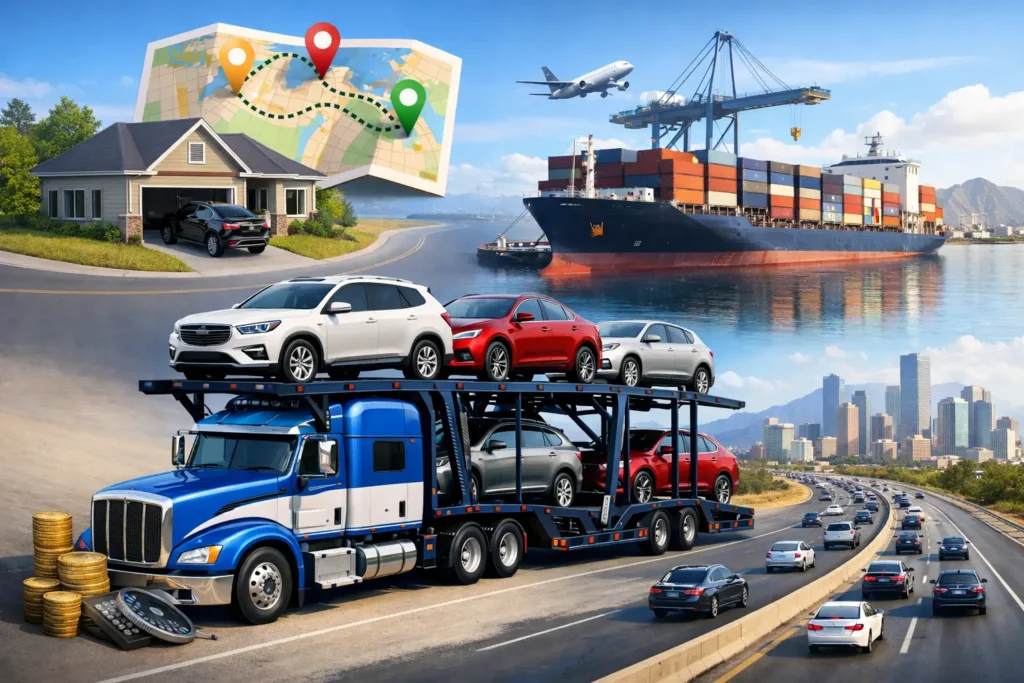
A vehicle shipping cost is not pulled from a flat-rate chart. It reflects the real conditions required to move your vehicle safely from pickup to delivery: the route, the equipment, the vehicle itself, carrier availability, and the level of service you choose. Understanding those details makes it easier to compare quotes confidently and choose transportation that fits your schedule and priorities.
For a standard sedan moving between major metro areas, the process may be straightforward. A lifted truck headed to a rural destination, a non-running auction vehicle, or a classic car requiring enclosed transport calls for different planning. The right quote accounts for those differences upfront, helping prevent surprises later.
What Determines Vehicle Shipping Cost?
Distance matters, but it is only one part of the quote. Longer routes usually have a higher total transport cost because they require more fuel, drive time, tolls, and carrier capacity. However, the price per mile often decreases on longer routes. A short move can still require a meaningful minimum charge because loading, dispatch coordination, inspection, and delivery take time regardless of mileage.
The route itself can matter as much as the number of miles. Major corridors with frequent carrier traffic are generally easier to service than remote areas, mountain roads, island routes, or locations with limited truck access. Shipping between large cities may offer more scheduling flexibility, while rural pickup or delivery can require additional route planning.
Carrier supply also changes. Auto transport is a live logistics market, not a fixed retail shelf price. Rates can move when a route has more vehicles needing transport than available carrier space. Weather patterns, seasonal demand, fuel costs, traffic conditions, and regional events can all affect capacity. A professional quote should reflect current market conditions rather than an unrealistic number that cannot attract a qualified carrier.
Your Vehicle’s Size, Condition, and Modifications
The type of vehicle being shipped has a direct effect on space, weight, loading requirements, and equipment needs. A compact car takes up less capacity than a full-size pickup, large SUV, cargo van, RV, or heavy equipment. Larger vehicles can also affect how a carrier builds a safe load, especially when height, weight, or ground clearance is a factor.
Accurate vehicle details are essential. Let the transport coordinator know about aftermarket lift kits, oversized tires, roof racks, spoilers, low ground clearance, winches, or other modifications. These features do not automatically prevent shipment, but they may change the equipment or placement required on the trailer.
Operable and inoperable vehicles are quoted differently. A vehicle that starts, steers, rolls, and brakes can usually be loaded with standard equipment. A non-running, salvage, rebuilt, or auction vehicle may need a winch or specialized loading arrangement. This is common with Copart, IAA, Manheim, ACV Auctions, and ADESA pickups, where accurate condition information helps avoid delays at release.
Open or Enclosed Transport
Open auto transport is the most common choice for everyday cars, SUVs, and trucks. Vehicles are loaded onto an open multi-car trailer, the same type of equipment commonly used for dealership inventory. It is a practical option for many relocations, online vehicle purchases, dealership transfers, and seasonal moves.
Enclosed transport provides a covered trailer and an added layer of protection from road debris and weather exposure. It is often preferred for luxury, exotic, classic, collector, or high-value vehicles. Because enclosed trailers have more limited capacity and specialized availability, they generally cost more than open transport. The decision should be based on the vehicle, your comfort level, and the protection you want during transit.
Motorcycles, boats, RVs, and heavy equipment also need equipment matched to their dimensions and securement requirements. A reliable quote starts with clear measurements and an honest description of the cargo. Guessing can lead to a carrier arriving with equipment that is not suitable for the job.
Timing Can Change Your Vehicle Shipping Cost
Flexible scheduling often gives dispatchers more options to match your vehicle with an available carrier. If your pickup window is broad, the transport team can focus on finding the right fit for the route rather than responding to a narrow deadline.
Expedited shipping is available for customers who need faster coordination, but it typically comes at a higher cost. The carrier may need to adjust a route, reserve a space quickly, or prioritize a specific pickup window. Expedited service can be useful for a military PCS move, a time-sensitive dealership transfer, an auction release deadline, or a buyer waiting on a recently purchased vehicle. It is best used when speed genuinely matters.
Seasonality is another consideration. Snowbird traffic can increase demand on popular routes between northern states and Florida. College move periods, military relocation cycles, winter weather, and holiday schedules can also affect carrier availability. Booking early gives you more time to review options, although pickup and delivery timing in vehicle transport always depends on carrier routing, traffic, weather, and operational conditions.
Pickup and Delivery Access Matter
Door-to-door vehicle shipping means the carrier picks up and delivers as close to your chosen addresses as safely and legally possible. That does not always mean a large tractor-trailer can enter every residential street, apartment complex, gated community, or business lot. Low-hanging trees, tight turns, narrow roads, parking restrictions, and local truck rules may require a nearby meeting point.
A nearby wide road, shopping center, or other accessible location can make loading safer and more efficient. This is not a reduction in service. It is practical route planning that protects your vehicle, the carrier’s equipment, and the surrounding area. Providing complete pickup and delivery details at the quote stage helps set clear expectations.
How to Get an Accurate Auto Transport Quote
The best quote begins with complete information. Share the year, make, model, current operating condition, pickup and delivery ZIP codes, and your preferred timing. Identify whether you need open or enclosed transport, and mention modifications or special circumstances before dispatch begins.
If the vehicle is at an auction, repair facility, port, dealership, storage yard, or residence, provide the available contact details and any release requirements. Auction pickups can involve gate hours, lot numbers, buyer IDs, storage deadlines, or condition limitations. Those details help the coordinator plan a smooth release and avoid unnecessary waiting time.
It is also wise to ask what the quote includes and how communication will work. A trustworthy transport provider should explain the service type, estimated pickup window, vehicle condition reporting, payment expectations, and any special handling requirements in plain language. Fully insured transport, FMCSA licensing, vetted carriers, and responsive dispatch support are not just marketing phrases. They are part of the operational foundation that helps your shipment stay organized.
Be cautious about choosing solely based on the lowest initial figure. A quote that does not reflect current carrier capacity may not be workable when it is time to assign a truck. The better question is whether the price is realistic for your route and service needs, and whether the company communicates clearly about the process.
When Paying More May Be Worth It
The least expensive option is not always the best value. Enclosed transport can be worthwhile for a collector vehicle. Expedited coordination can be worthwhile when timing has real consequences. Winch service is necessary when an inoperable vehicle cannot be loaded conventionally. Better access planning may be worthwhile when a vehicle must be collected from a busy auction lot or delivered to a difficult location.
On the other hand, a flexible pickup window and open transport may be the sensible choice for a standard daily driver. There is no single right answer for every shipment. The goal is to match the service to the vehicle, route, timing, and level of protection you need.
DQ Trans LLC coordinates nationwide door-to-door transport across all 50 states, including Alaska, Hawaii, and Puerto Rico, through a carefully vetted carrier network. From a family SUV to a motorcycle, auction vehicle, RV, boat, or piece of heavy equipment, clear information at the start allows the right transport plan to come together faster.
A dependable shipment begins with an honest quote, realistic expectations, and a team that treats your vehicle like a serious responsibility. Share the full details of your route and vehicle, then choose the transport option that gives you confidence from pickup through delivery.