
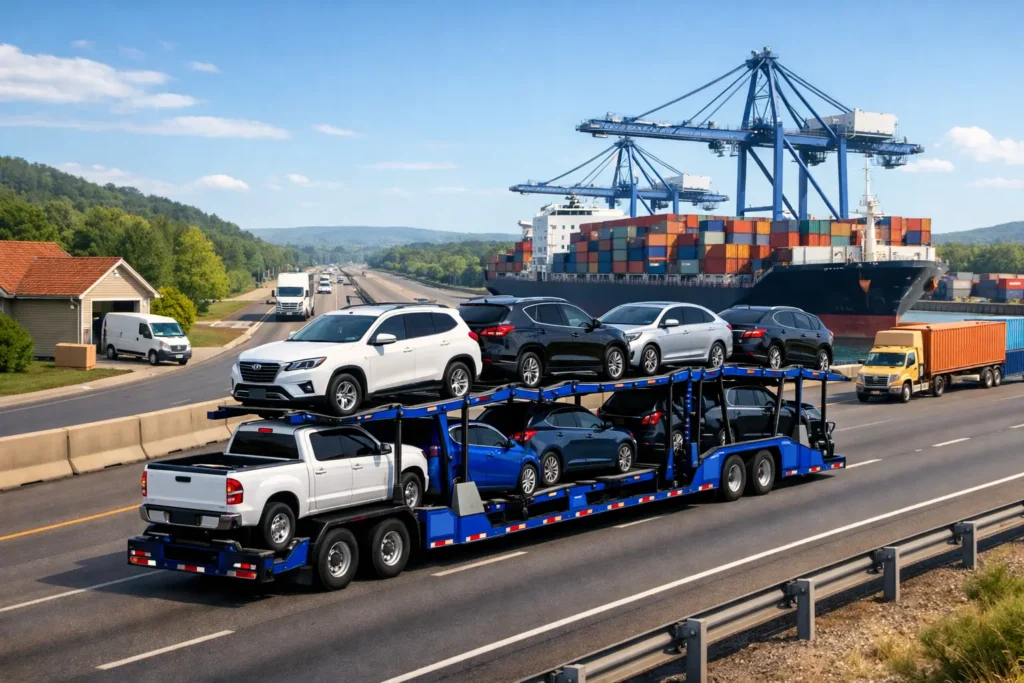
A vehicle shipment can look simple on a quote, then become complicated when pickup day arrives. The real difference in door to door vs terminal shipping is not just the location where keys change hands. It affects your schedule, vehicle access, storage exposure, carrier routing, and how much coordination you must handle yourself.
For most customers, door-to-door service is the practical choice because it brings the carrier as close to the pickup and delivery addresses as safety and local access allow. Terminal shipping can work in specific situations, but it requires more planning and careful confirmation of the facility. Knowing how each option works helps you choose service that fits your vehicle, route, and timeline without surprises.
What Door-to-Door Vehicle Shipping Means
Door-to-door auto transport means the carrier picks up and delivers your vehicle at or near the addresses you provide. This may be your residence, a dealership, an office, an auction, a repair facility, or another agreed location with safe access for the truck.
“Door to door” does not always mean a large car-hauler can pull directly into every driveway. Most open transport trailers are long and need room to turn, load, and clear low branches, parked cars, narrow streets, or local restrictions. If your street is difficult for a commercial carrier to access, the driver may arrange a nearby meeting point such as a wide shopping center lot, truck-friendly road, or other safe location.
That small adjustment still gives you the convenience of local pickup and delivery without requiring you to travel to a distant storage terminal. Before loading, the driver completes a vehicle condition inspection and documents it on the bill of lading. At delivery, you or your authorized contact inspect the vehicle again before accepting it.
Why Most Customers Choose Door-to-Door Service
Convenience is the biggest advantage. Families relocating, military members managing a PCS move, snowbirds, college students, dealership teams, and online vehicle buyers often have enough deadlines to manage already. Local pickup and delivery reduce unnecessary trips and keep the process easier to track.
Door-to-door service also limits the time your vehicle sits at a third-party facility. The vehicle remains with the assigned carrier during transit rather than being dropped off early or collected later from a terminal. For specialty vehicles, inoperable cars, motorcycles, luxury vehicles, and auction purchases, fewer handoffs can make coordination simpler.
It is also a strong fit when you need a carrier to pick up from Copart, IAA, Manheim, ACV, ADESA, or another auction location. Auction pickups require accurate lot details, release information, vehicle status, and loading requirements. A professional transport coordinator can arrange the carrier pickup directly from the facility and keep you updated on the shipment.
How Terminal Shipping Works
Terminal shipping involves dropping a vehicle at a designated terminal before transport or collecting it from one after delivery. A terminal may be a storage yard, carrier facility, dispatch location, or contracted lot. It is not necessarily located near your home, and it should never be assumed that a terminal is available on every route.
With this option, you are responsible for getting the vehicle to the terminal and retrieving it within the facility’s operating hours and storage rules. Some locations require appointments, identification, proof of ownership, or an authorized pickup contact. Storage charges may apply if the vehicle remains there beyond the included period, if any.
Terminal service may be useful when a carrier cannot safely access your area, when you will not be available for delivery, or when you prefer to coordinate your own drop-off and pickup around a known facility. However, it is not automatically less expensive. The final cost depends on route demand, vehicle size, carrier capacity, terminal handling, storage needs, and local logistics.
Questions to Ask Before Choosing a Terminal
Terminal shipping needs clear details before you commit. Confirm the exact terminal address, business hours, whether the location accepts your vehicle type, and how long it can hold the vehicle. Ask whether the facility can accept inoperable vehicles, oversized trucks, motorcycles, RVs, boats, or auction vehicles.
You should also confirm who may release and collect the vehicle, what identification is required, and whether the terminal has any additional access or storage fees. If your vehicle is enclosed transport eligible or has low ground clearance, verify that the terminal can handle it appropriately. A vague promise of “terminal delivery” is not enough – you need a confirmed facility and a clear handoff plan.
Door to Door vs Terminal Shipping: Key Differences
The best choice comes down to control and convenience versus your willingness to manage extra travel and terminal requirements. Door-to-door shipping is generally more customer-friendly because the carrier coordinates pickup and delivery near your locations. Terminal shipping puts more of the timing and transportation responsibility on you.
With door-to-door transport, the carrier route can be adjusted around safe local meeting points. With terminal shipping, the vehicle may need to be delivered or collected during limited hours, which can be difficult if you are traveling, working, or coordinating a time-sensitive move.
Vehicle condition is another consideration. An operable sedan can often be driven to a terminal without much difficulty. An inoperable vehicle, salvage vehicle, non-running auction purchase, or specialty unit may require winch-capable equipment and precise planning. In those cases, direct carrier pickup is often the more practical arrangement.
Security and handling matter as well. Both options should involve professional procedures and documented inspections. Still, a terminal may introduce additional custody changes and periods of storage. Customers transporting classic, exotic, electric, or high-value vehicles frequently prefer door-to-door enclosed transport because it minimizes extra handling and keeps the process more controlled.
When Door-to-Door Shipping Is the Better Fit
Door-to-door transport is usually the right choice if your priority is convenience, direct communication, and fewer moving parts. It is especially helpful when you have a reliable pickup contact and a delivery contact who can meet the driver or authorize someone to do so.
Choose this option when you are shipping a vehicle for a military PCS move, sending a student’s car to campus, relocating seasonally, purchasing a vehicle online, moving dealership inventory, or arranging an auction pickup. It is also the preferred option when the vehicle cannot be driven, because the carrier can arrive with the right loading plan rather than requiring you to solve terminal delivery first.
A nearby meeting point is not a service failure. It is often the safest solution for both the vehicle and the carrier when neighborhood access is limited. The key is communication before dispatch so the driver knows about gated communities, low-clearance streets, narrow roads, construction, or any other access concern.
When Terminal Shipping May Make Sense
Terminal shipping can be a reasonable alternative if you live in an area that large transport equipment cannot safely reach and there is a confirmed, convenient facility nearby. It can also help when your travel schedule makes direct delivery difficult and you are comfortable retrieving the vehicle during the terminal’s business hours.
This option may suit customers who have flexible access to the vehicle and want to handle the local drop-off or pickup themselves. It can be useful on select routes, but availability varies considerably. Do not select terminal service solely because it sounds cheaper. Compare the full picture, including your travel time, fuel, possible storage charges, and the practical difficulty of getting the vehicle to or from the facility.
How to Make Either Shipping Option Go Smoothly
Whether you select door-to-door or terminal delivery, accurate information leads to a better shipment. Provide the correct vehicle year, make, model, condition, modifications, pickup and delivery details, and contact information. Let your transport coordinator know if the vehicle is inoperable, has limited ground clearance, is oversized, or needs special loading equipment.
Remove personal items, keep the fuel level low, and make sure the vehicle is accessible at pickup. Have a spare key available when possible. For terminal arrangements, confirm every facility requirement in advance rather than waiting until the carrier is assigned.
DQ Trans LLC coordinates fully insured vehicle transportation through a vetted network of professional carriers and provides responsive updates from dispatch through delivery. Whether your shipment is headed across a state line or across the country, the goal is to match the service method to your real needs, not force your vehicle into a one-size-fits-all plan.
The right shipping choice is the one that gives you a clear handoff plan, safe access for the carrier, and confidence about where your vehicle will be at every stage. For most customers, that means door-to-door service with a practical nearby meeting point when needed. For the situations where a terminal is the better fit, clear facility details and early planning make all the difference.