
Quick answer
Open car shipping carries vehicles on an uncovered multi-car trailer, while enclosed car shipping carries them inside a covered trailer that blocks weather, road debris and public view.
The trade-off is price: enclosed shipping usually runs 30 to 60 percent more than open shipping, depending on distance, vehicle size and availability (FreightWaves).
You want your car to arrive the way it left. But the enclosed quote is hundreds of dollars higher, and you are not sure the extra protection is worth it for your vehicle.
Most owners never need it. Open carriers handle the large majority of U.S. vehicle shipments, and they deliver millions of cars a year without trouble. Still, some vehicles genuinely benefit from a covered trailer, and choosing wrong costs either money or paint.
This guide compares enclosed vs open car shipping on cost, protection, speed and insurance. You will finish knowing which one fits your car, your budget and your timeline.
What is the difference between enclosed vs open car shipping?
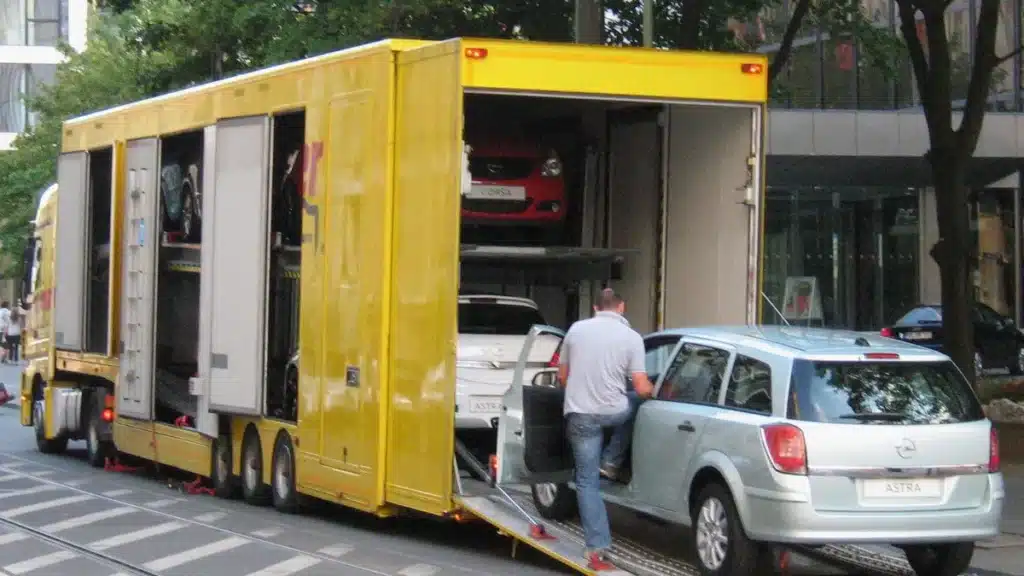
The difference is the trailer: open carriers expose cars to the elements on an uncovered rack, while enclosed carriers load them inside a walled, roofed trailer. Everything else, from booking to the bill of lading, works the same way.
| Feature | Open carrier | Enclosed carrier |
|---|---|---|
| Trailer | Uncovered, usually two decks | Hard- or soft-sided, roofed |
| Typical capacity | 7 to 10 cars | 1 to 6 cars |
| Exposure | Weather, dust, small debris | Fully shielded |
| Loading | Steel ramps | Often hydraulic liftgate |
| Relative price | Baseline | About 30 to 60 percent more |
Open trailers carry ~90 percent of vehicles shipped in the U.S. (uShip). For a deeper look at the standard option, see open auto transport explained. The biggest practical difference is price, so that comes next.
How much more does enclosed car transport cost?
Enclosed car transport typically costs 30 to 60 percent more than open transport on the same route, because each trailer carries fewer cars. The carrier spreads the same fuel and driver costs over fewer vehicles.
The gap widens or narrows based on:
- Route. Fewer enclosed trucks run rural lanes, so the premium rises.
- Season. Classic car show season and snowbird months tighten enclosed capacity.
- Vehicle size. A large SUV in an enclosed trailer uses scarce space.
- Liftgate needs. Very low cars may need a liftgate, which narrows the carrier pool.
Your exact figure depends on the lane. Run both options in our car shipping cost calculator, then compare the difference against your car’s value and condition. Our car shipping cost guide explains every pricing factor. Price only matters relative to risk, which is the next question.
Is open car transport safe?
Yes, open car transport is safe for most vehicles, and serious damage is uncommon; the realistic risks are dust, rain, road grime and the occasional stone chip. Those are the same exposures your car faces on a highway drive.
Open transport still has limits. Cars on the lower deck can collect fluid drips from vehicles above, and late-fall routes through northern states can mean road salt. Most of this washes off.
To lower the risk on an open carrier:
- Request a top-deck spot if your car has fresh paint.
- Remove loose exterior parts like bike racks and antennas.
- Document condition with dated photos before pickup.
- Inspect carefully at delivery before signing the bill of lading.
Top-deck placement is a request, not a guarantee, because drivers load by weight and stop order. If the risk of any exposure is unacceptable, enclosed is the answer. That depends on the car.
When is enclosed car transport worth it?
Enclosed car transport is worth it when the cost of a chip, scratch or exposure is higher than the price difference. That is usually true for classic, exotic, luxury, collector and show cars.
Choose enclosed if your vehicle is:
- Classic or collector, where original paint drives value.
- Exotic or high-end, with expensive body panels.
- Low-clearance, needing a liftgate instead of steep ramps.
- Freshly painted, wrapped or ceramic coated.
- Heading to a show, auction or sale and must arrive clean.
- Moving in winter through salt-heavy northern routes.
Choose open if your car is a daily driver, a lease return or a standard sedan, SUV or truck. Owners of vintage cars should also read our classic car shipping mistakes guide. Protection also connects to insurance, which works differently than many expect.
Does insurance differ between open and enclosed carriers?
The legal liability is the same, but enclosed carriers often carry higher cargo insurance limits because they haul more valuable vehicles. Always check the limit against your car’s value.
Federal rules require for-hire carriers to carry liability coverage of at least $750,000 for general property (49 CFR 387.9). That is public liability. Your car is protected by the carrier’s separate cargo policy.
Before loading, ask for the certificate of insurance and check:
- Cargo limit per vehicle and per load.
- Deductible and who pays it.
- Exclusions, such as weather or undisclosed damage.
- Named insured matching the carrier on the truck.
A $150,000 car on a truck with a $100,000 cargo limit is underinsured. Enclosed carriers serving collectors usually carry higher limits. With coverage settled, the last factor is time.
Which is faster, open or enclosed transport?
Open transport is usually faster to book because far more open trucks are on the road, while enclosed shipments may wait longer for a truck on the same lane. Once loaded, transit times are similar.
| Stage | Open | Enclosed |
|---|---|---|
| Carrier assignment | Often 1 to 5 days | Often several days longer |
| Transit | Similar by distance | Similar by distance |
| Booking lead time | 1 to 2 weeks | 2 to 4 weeks |
If you need enclosed transport on a tight date, book earlier and give a wider pickup window. Our guide on how long auto transport takes shows transit by distance.
Ready to choose? Compare our enclosed auto transport service with open auto transport for your route.
FAQ
Can I choose a top-load position on an open carrier?
You can request it, and many carriers will try. Placement depends on vehicle weight, height and delivery order, so it is rarely guaranteed. Ask whether a guaranteed top-load option exists on your route and whether it carries an extra fee.
Is soft-sided or hard-sided enclosed transport better?
Hard-sided trailers offer the most protection from impact and theft. Soft-sided trailers use heavy curtains that still block weather and debris at a lower price. For high-value or show cars, hard-sided is the safer choice.
Should I ship a new car enclosed?
Not necessarily. Dealers move most new cars on open carriers. Enclosed makes sense for new luxury or performance models, or if you plan to apply paint protection film. For standard new vehicles, open transport is the industry norm.
Can a non-running car go on an enclosed trailer?
Yes, if the carrier has a winch and the car rolls, steers and brakes. Tell the broker the exact condition when you book, because not every enclosed truck is equipped for inoperable vehicles.
Does enclosed shipping protect against theft?
It lowers exposure because the car is out of sight and inside a locked trailer. Theft from either type of carrier is rare. Remove valuables, toll tags and garage openers regardless of which trailer you choose.
Summary
- Open carriers move about 90 percent of U.S. vehicles and are safe for most daily drivers; the main risks are dust, weather and small chips.
- Enclosed transport usually costs 30 to 60 percent more and is worth it for classic, exotic, low-clearance, freshly painted or show cars.
- Check the carrier’s cargo insurance limit against your car’s value, and book enclosed transport earlier because fewer trucks run.
Not sure which fits your car? Get both quotes side by side, or tell us about your vehicle in the comments. Next, read classic car shipping mistakes to avoid.
References
- Open vs. Enclosed Car Shipping: Which Should You Choose in 2026?. FreightWaves.
- Enclosed Transport vs Open Car Shipping guide. uShip.
- 49 CFR 387.9: Minimum levels of financial responsibility for motor carriers. Electronic Code of Federal Regulations.
Featured image: Wikimedia Commons contributor, Public domain via Wikimedia Commons.