
Quick answer
A car shipping broker is a federally licensed company that arranges your vehicle’s transport by matching it with an authorized motor carrier, without owning the truck that moves it.
Federal rules set the bar: a property broker must hold FMCSA authority and keep a $75,000 surety bond or trust fund on file (49 CFR 387.307).
You ask for a quote and get a call from a company you have never heard of. Then the truck that arrives has a different name on the door. Many first-time shippers wonder if something went wrong.
Usually nothing did. Most U.S. car shipments are arranged by brokers and driven by independent carriers, and online quote forms have made that split more common, not less.
This guide explains what a car shipping broker does, how it differs from a carrier and how each one is regulated. You will also get a short checklist for vetting either before you hand over your keys. Full disclosure: DQ Trans LLC is a licensed broker, so we explain both sides plainly.
What is a car shipping broker?
A car shipping broker is a licensed middleman that books your car onto a carrier’s truck and manages the shipment until delivery. Federal rules define a broker as a party that arranges transportation for compensation but is not the carrier (49 CFR Part 371).
In practice, a broker does four jobs:
- Quotes the move using current lane prices.
- Posts the load to carriers running your route.
- Vets the carrier for authority, insurance and safety record.
- Coordinates updates from booking through delivery.
A broker never takes physical control of your car. The carrier does. That is why the name on the truck often differs from the company you booked with. The next question is what a carrier brings to the table.
What is the difference between a broker and a carrier?
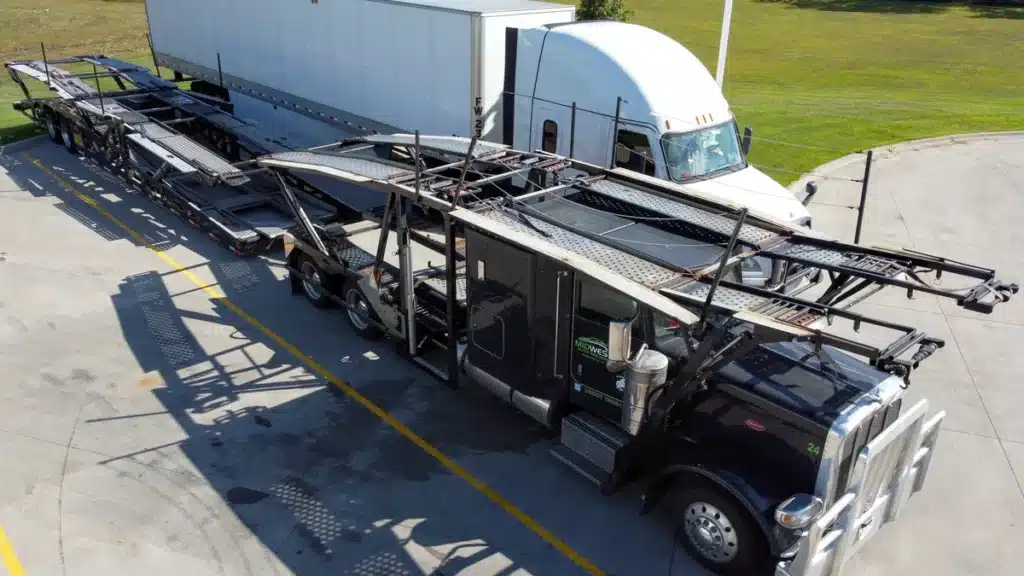
A carrier owns or leases the trucks and physically moves your car; a broker arranges the move and connects you with that carrier. Each holds a different type of federal authority.
| Question | Broker | Carrier |
|---|---|---|
| Owns trucks? | No | Yes |
| FMCSA authority | Property broker | Motor carrier |
| Financial requirement | $75,000 bond or trust fund | Liability insurance filing |
| Route coverage | Any lane with available carriers | Its own lanes and schedule |
| Who you talk to | Dispatch and support team | The driver or a small office |
For-hire carriers of general property must carry at least $750,000 in public liability coverage (49 CFR 387.9). Cargo coverage, which protects your car itself, is a separate policy. Our how auto transport works page shows where each party fits. Knowing who is who leads to the money question.
How do car shipping brokers make money?
A broker earns the difference between what you pay and what the carrier accepts for the load, often collected as a deposit at booking. The rest goes to the carrier, usually at delivery.
A typical payment split looks like this:
- Booking deposit to the broker once a carrier is assigned or the order is confirmed.
- Balance to the carrier at delivery, often by cash, certified check or an agreed electronic method.
That margin pays for dispatch staff, carrier vetting, tracking and support. It also explains a common trap. Some sellers quote very low to win the booking. Carriers then ignore the load because it pays too little, and the price rises later.
A fair broker quote reflects what carriers on your lane actually accept. Our car shipping cost guide explains those price drivers. So is the margin worth paying?
Is it better to use a broker or go direct to a carrier?
For most one-time interstate moves, a reputable broker is faster and more flexible; going direct can work if a carrier already runs your exact route on your dates. Each option fits a different situation.
Choose a broker when:
- Your route is long, rural or unusual.
- You need pickup within a few days.
- You want one point of contact if a truck breaks down.
- You are shipping to Hawaii, Alaska or Puerto Rico and need ground plus ocean legs.
Go direct to a carrier when:
- You know a carrier that runs your lane regularly.
- Your dates are flexible enough to match its schedule.
- You are comfortable vetting insurance yourself.
Small carriers are often one or two trucks. If that truck is delayed, there may be no backup. A broker can reassign the load. Whichever you choose, the vetting steps are the same.
How do I check if a car shipping broker is legitimate?
Look up the company’s USDOT and MC numbers on the FMCSA SAFER system, confirm its authority is active, and match the name and address to the quote you received. This takes about five minutes.
- Ask for the USDOT and MC numbers. A legitimate company gives them without hesitation.
- Search them on SAFER. Check that the entity type says broker or carrier as claimed.
- Confirm the authority is active, not revoked or pending.
- Match the legal name and address to the company’s website and contract.
- Read the contract for cancellation terms, deposit rules and the pickup window.
- Ask how carriers are vetted. A good answer mentions authority, insurance certificates and safety records.
Federal rules also bar a broker from presenting itself as a carrier (49 CFR 371.7). If a company says it owns trucks, SAFER should show carrier authority. For example, DQ Trans LLC is listed as USDOT 4251528, MC 1648063. More warning signs are in our auto transport scam guide. One question remains: who handles damage?
Who is responsible if my car is damaged during shipping?
The carrier is responsible for damage that happens while your car is in its custody, and its cargo insurance is the main source of payment. A good broker helps you file the claim and gather evidence.
Federal law makes carriers liable for actual loss or injury to the property they transport, and it sets minimum claim windows: at least nine months to file a claim and two years to sue after a denial (49 U.S.C. 14706).
To protect yourself:
- Photograph the car before pickup with date stamps.
- Mark all existing damage on the bill of lading at pickup.
- Inspect at delivery and write new damage on the bill of lading before signing.
- Request the carrier’s certificate of insurance before the car is loaded.
Our car shipping mistakes guide covers the paperwork errors that sink claims. If you want a licensed broker to handle the matching and the follow-up, see how DQ Trans works.
FAQ
Is DQ Trans LLC a broker or a carrier?
DQ Trans LLC is a licensed auto transport broker, USDOT 4251528 and MC 1648063. We do not own the trucks. We match each shipment with an FMCSA-authorized carrier, check its insurance and manage communication from booking to delivery.
Why did a different company pick up my car?
If you booked through a broker, the truck belongs to the assigned carrier, so its name will differ from the broker’s. Ask your broker for the carrier’s name and USDOT number before pickup and check that it matches the truck.
Are broker quotes guaranteed?
Some quotes are estimates that can change if carriers will not accept the price. Others are locked once a carrier is assigned. Ask whether your price is final, what could change it, and get the answer in writing before paying a deposit.
Can a broker cancel my shipment?
Yes, under the terms in its contract, for example if no carrier accepts the load in time. Read the cancellation and refund terms before booking. A reputable broker explains when the deposit is refundable and when it is not.
Do brokers have their own insurance for my car?
Brokers carry a federally required bond, but the car itself is normally covered by the carrier’s cargo insurance while in transit. Some brokers add contingent coverage. Ask which policy pays first and request the certificate before pickup.
Summary
- A car shipping broker arranges the move and vets the carrier; the carrier owns the truck and is liable for the car in transit.
- Brokers must hold FMCSA authority and a $75,000 bond; carriers must file at least $750,000 in liability coverage, with cargo coverage separate.
- Verify any company’s USDOT and MC numbers on SAFER and match the name, address and authority type before you pay.
Want a licensed broker to handle your move? Get a quote from DQ Trans, or leave your question in the comments. Next, read our guide to spotting auto transport scams.
References
- 49 CFR 387.307: Property broker surety bond or trust fund. Electronic Code of Federal Regulations.
- 49 CFR Part 371: Brokers of property (definitions and misrepresentation rule). Electronic Code of Federal Regulations.
- 49 CFR 387.9: Minimum levels of financial responsibility for motor carriers. Electronic Code of Federal Regulations.
- 49 U.S.C. 14706: Liability of carriers under receipts and bills of lading. Legal Information Institute, Cornell Law School.
- SAFER Company Snapshot lookup. Federal Motor Carrier Safety Administration.
Featured image: Wikideas1, CC0 via Wikimedia Commons.