
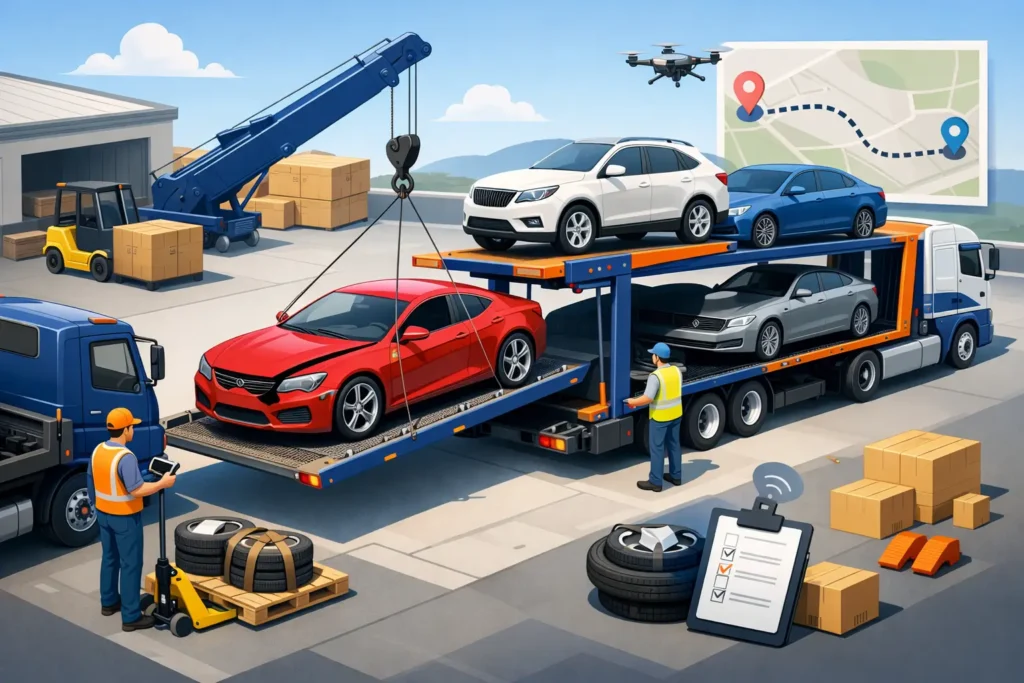
A car that will not start cannot simply be driven onto a standard carrier. It needs the right equipment, accurate condition details, and a carrier prepared to load it safely. Knowing how to ship a non running car before requesting transport helps prevent avoidable delays, last-minute equipment issues, and unexpected charges.
Whether your vehicle is at a residence, repair facility, dealership, auction yard, or port, the process is straightforward when the transport company has complete information from the start. The key is to clearly identify what the vehicle can and cannot do.
What Counts as a Non-Running Car?
In auto transport, a non-running or inoperable car is generally any vehicle that cannot be driven onto and off a carrier under its own power. That may mean it will not start, has no usable battery, cannot shift into neutral, has locked wheels, or cannot roll freely.
Not every non-running vehicle requires the same loading method. A car that rolls, steers, and can be placed in neutral is typically easier to load than one with seized wheels or a locked steering system. Those differences affect the type of carrier, loading equipment, scheduling options, and transport cost.
When you request a quote, be direct about the condition. Say whether the vehicle starts, rolls, steers, brakes, shifts into neutral, and has inflated tires. If you are arranging a pickup from Copart, IAA, Manheim, ACV Auctions, ADESA, or another auction, provide the lot number and pickup release details as well.
How to Ship a Non-Running Car Safely
The safest approach is to arrange transport with an auto shipping company that regularly coordinates inoperable vehicle moves. The carrier must have the proper equipment, usually a winch, to pull the vehicle onto the trailer without attempting to drive it.
A professional transport coordinator will confirm the vehicle’s operating condition, pickup location, destination, dimensions, and any special access requirements. This information allows the carrier to arrive prepared rather than discovering a loading issue at pickup.
Choose a Carrier Equipped for Inoperable Vehicles
A winch-equipped carrier is often required for non-running cars. A winch uses a secured cable system to guide the vehicle onto the trailer. It is especially useful when a vehicle will not start but still rolls and steers.
If the car does not roll, will not steer, has flat tires, or has other restrictions that make ordinary winch loading impractical, the shipment may require more specialized handling. Share those details before booking. The right plan depends on the vehicle’s actual condition, not simply whether the engine starts.
For most standard sedans, SUVs, and trucks, open auto transport is a practical option. An open carrier is commonly used for auction vehicles, salvage cars, dealer transfers, and insurance-related moves. Enclosed transport may be a better fit for a classic, luxury, exotic, collector, or high-value vehicle that needs added protection from road exposure. Enclosed service generally has more limited capacity and may cost more.
Give Accurate Pickup and Delivery Information
Door-to-door auto transport means the carrier works to pick up and deliver as close to the listed addresses as safely and legally possible. Large car carriers need room to turn, load, and park. Narrow streets, low branches, tight apartment complexes, restricted gates, and heavy traffic can make direct access difficult.
If a full-size carrier cannot safely reach the location, the driver may coordinate a nearby meeting point with adequate space. This is common in dense neighborhoods, downtown areas, some rural roads, and auction facilities with specific release procedures.
Auction pickups require extra attention. Confirm that the auction has released the vehicle, that all required fees are handled, and that the carrier has the correct lot number, buyer number, stock number, and pickup authorization. A carrier cannot retrieve a vehicle that the auction has not released.
Prepare the Vehicle for Loading
Preparation for a non-running shipment is mostly about access and accurate documentation. Make sure the keys are available and that the carrier can access the vehicle. If possible, remove personal belongings and loose items from the interior. Auto carriers are designed to transport vehicles, not personal property, and unsecured items can shift during loading or transit.
Document the vehicle’s condition before pickup. Take clear photos of all sides, the interior, wheels, glass, and any existing damage. At pickup, the driver will complete a vehicle condition report, often called a bill of lading. Review it carefully and keep a copy for your records.
For vehicles being collected from an auction, repair shop, body shop, or storage facility, make sure the location knows the carrier is authorized to pick up the vehicle. Providing a reliable contact person can reduce unnecessary waiting at the gate or service counter.
What Affects the Cost to Ship a Non-Running Car?
Shipping an inoperable car usually costs more than shipping a vehicle that runs and drives. The additional cost reflects the time, equipment, labor, and carrier capacity needed for safe loading and unloading.
The final transport rate depends on several practical factors:
- The vehicle’s condition, including whether it rolls, steers, and can be shifted into neutral
- Whether a winch or other specialized loading approach is needed
- The vehicle’s size and weight, especially for oversized trucks, SUVs, and specialty vehicles
- The distance and route between pickup and delivery
- The type of carrier selected, such as open or enclosed transport
- Pickup and delivery access, including auction rules, rural roads, or restricted locations
- Seasonal demand and current carrier availability on the route
The lowest quote is not always the most useful quote for an inoperable vehicle. A meaningful quote should reflect the vehicle’s real loading requirements. If a car is booked as operational but cannot be driven onto the trailer, the driver may not have the needed winch or may need to reschedule the pickup.
Timing: Plan for Flexibility
Non-running vehicle shipments can require more coordination than standard running-car transport. Carrier availability, route demand, weather, auction release timing, and equipment requirements all influence the pickup and delivery window.
If your vehicle is at an auction, request transport as soon as it is released. Auction storage charges can begin quickly, and the pickup window may be limited. If it is at a repair or body shop, confirm the business hours and after-hours procedures before scheduling.
Expedited transport may be available for customers facing a tighter timeline, but availability depends on the route and the type of equipment required. A responsive dispatch team can explain realistic options and keep you informed as the shipment is assigned and moved.
Questions to Ask Before Booking
Before arranging transport, confirm that the company understands the car is inoperable and ask whether winch service is included in the quote. You should also verify the expected pickup window, whether open or enclosed transport is recommended, and what documents are needed at the pickup location.
Ask how the condition report will be handled and who will receive the vehicle at delivery. If no one can be present, make arrangements in advance with the transport coordinator. Clear communication at both ends of the route protects the schedule and makes delivery easier.
DQ Trans LLC coordinates fully insured, FMCSA-compliant transport for running and non-running vehicles nationwide, including auction pickups and specialty vehicle moves. Our team confirms the details that matter before dispatching a qualified carrier, so your vehicle is handled with the preparation its condition requires.
A non-running car does not have to become a complicated shipment. Give the transport team a complete picture of the vehicle, choose equipment suited to its condition, and allow enough time for proper carrier coordination. That preparation is what turns a difficult pickup into a controlled, professional move.