
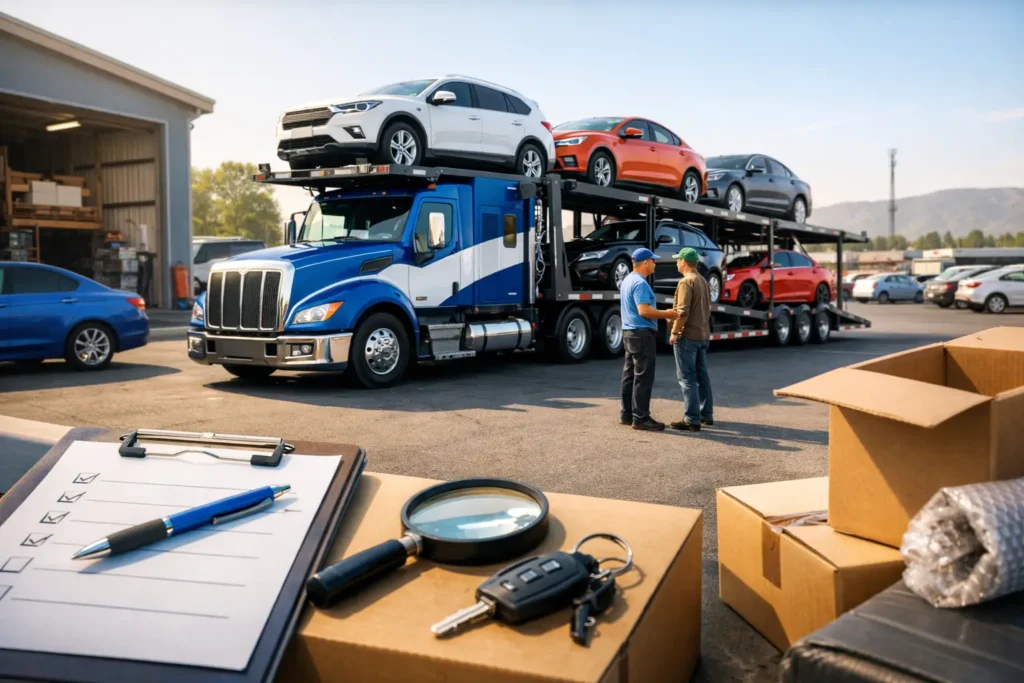
A vehicle can be paid for, sitting at Copart, IAA, Manheim, ACV, or ADESA, and still not be ready to move. The top questions before auction pickup are the ones that prevent storage charges, failed release attempts, carrier turnaways, and unnecessary delays after the sale. A few clear answers early give your transporter the information needed to coordinate a safe, efficient pickup.
Auction shipping is different from collecting a vehicle at a private driveway or dealership. Auction yards operate on set release rules, loading procedures, business hours, and access requirements. That is especially true for salvage, inoperable, and high-volume auction inventory. Asking the right questions protects your timeline and helps the carrier arrive prepared.
Top Questions Before Auction Pickup: Release and Access
Has the vehicle been paid for and released for transport?
Payment confirmation does not always mean the unit is cleared for pickup. Ask the auction whether all balances have been paid and whether the vehicle has been released to your buyer account. If a gate pass, release number, or transport order is required, make sure it has been issued before dispatching a carrier.
Some auctions have a processing period between payment and release. Others require the buyer or authorized transporter to complete a separate release step. Sending a truck before that process is complete can result in a wasted trip. Confirm the release status directly and provide the carrier with the exact information the auction requires.
What pickup details does the carrier need?
At a minimum, the transporter will usually need the auction name and branch location, lot number, vehicle identification number, buyer number, and an approved release or gate pass. The buyer name must match the auction record. If another person or business is listed as the buyer, clarify who is authorized to release the vehicle.
It also helps to provide a reliable pickup contact. The carrier may need to communicate with auction staff at the gate or reach you quickly if a release record is missing. Accurate paperwork is one of the simplest ways to avoid a preventable pickup delay.
What are the auction’s pickup hours and rules?
Do not assume a carrier can enter the yard at any time. Ask about weekday hours, weekend availability, driver check-in procedures, load-out rules, and whether appointments are required. Some facilities have separate procedures for standard vehicles, heavy equipment, motorcycles, and units that cannot be driven.
Ask whether the auction has any restrictions on carrier type or loading equipment. A large multi-car hauler may need different access than a smaller truck and trailer. Knowing the site rules allows dispatch to match the vehicle with an appropriate carrier rather than treating every pickup like a routine driveway load.
Questions About the Vehicle’s Actual Condition
Auction listings are useful, but transport planning should be based on the vehicle’s current condition at the yard. A vehicle marked as run-and-drive may still have a flat tire, low clearance, body damage, a missing key, or other loading challenges. Clear information helps the carrier bring the right equipment and set realistic handling expectations.
Does it start, steer, roll, and brake?
These are four separate questions. A vehicle may start but not move safely under its own power. It may roll but have locked steering, damaged suspension, or no effective brakes. Tell the transporter exactly what is known, including whether the key is available and whether auction staff can assist with loading.
For an inoperable vehicle, a carrier may need a winch, a trailer with the correct loading angle, or specialized handling procedures. That can affect carrier availability and the shipping rate, but it is far better to disclose the condition upfront than have a driver arrive without the equipment needed to load it.
Are there damage, clearance, or modification concerns?
Ask whether the vehicle has visible collision damage, a loose bumper, broken glass, flat tires, missing wheels, suspension damage, or a low front end. For trucks, SUVs, RVs, boats, and heavy equipment, confirm the approximate dimensions and whether there are oversized components.
Motorcycles need their own details, including whether they roll freely and whether handlebars, fairings, or forks are damaged. Luxury, classic, exotic, and collector vehicles may benefit from enclosed transport depending on the route, condition, and your preferred level of protection. The best transport method depends on the vehicle and the move, not just the auction location.
Is the vehicle accessible in the yard?
A unit may be parked in a tight row, blocked by other inventory, or placed in an area that requires auction staff to bring it forward. Ask whether the vehicle is available for immediate load-out or needs to be staged. This matters when a carrier has limited time at the facility and a full route to complete.
Questions That Prevent Storage Fees and Timing Surprises
When does the free pickup period end?
Most auctions have a limited window before storage charges begin. Ask for the last free day, the daily storage rate, and whether fees must be paid before the vehicle can leave. Keep in mind that carrier scheduling depends on route capacity, weather, traffic, facility hours, and equipment availability. Early booking creates more options and reduces pressure as the storage deadline approaches.
If you are purchasing multiple vehicles, confirm whether every lot has the same deadline. They may have been purchased on different days or located at different auction branches. A coordinated transport plan can prioritize units with the earliest pickup deadline.
Is there a specific pickup appointment or load-out process?
Some locations allow carriers to arrive during open hours, while others require advance scheduling. Ask whether the appointment must be made by the buyer, the transporter, or auction staff. Also confirm whether the facility needs the carrier’s company name, driver name, truck information, or proof of authorization before entry.
Sharing these details with dispatch early helps avoid last-minute calls and gives the carrier a clean pickup path. It also lets the transport coordinator advise you if the auction’s rules require extra lead time.
Questions About Delivery Before You Book
Where can the carrier safely deliver the vehicle?
Door-to-door auto transport means the carrier delivers as close to your address as safely and legally possible. Large trucks may have trouble with narrow residential streets, low branches, tight turns, low bridges, or restricted entrances. If access is limited, plan a nearby open parking area, commercial lot, or other safe meeting point.
Confirm who will accept the vehicle at delivery and whether that person can inspect it with the driver. If the vehicle is inoperable, make sure the delivery location has a level, accessible area where it can be unloaded safely. A little planning at the destination matters as much as planning at the auction gate.
Do I need open or enclosed transport?
Open transport is the standard choice for many auction purchases and is a practical option for everyday cars, trucks, SUVs, and salvage vehicles. Enclosed transport provides additional protection from road exposure and is often chosen for high-value, exotic, classic, luxury, or collector vehicles.
The right choice depends on the vehicle’s value, condition, route, season, and your preferences. Ask for both options when the vehicle calls for added protection, then choose based on the level of service that fits your shipment.
What documentation should I keep ready?
Keep your auction purchase confirmation, release information, vehicle details, and delivery contact information in one place. Before pickup, take screenshots or save copies of the listing condition report and auction photos for your own records. At delivery, be ready to review the vehicle with the driver and note its visible condition on the transport paperwork.
Turn Answers Into a Better Pickup Plan
The most productive auction pickup conversations are specific. Instead of saying, “It is at Copart,” provide the branch, lot number, release status, operational condition, storage deadline, and delivery location. That gives a transport coordinator enough information to identify the right carrier and equipment from the start.
DQ Trans LLC coordinates fully insured, FMCSA-licensed auction vehicle transport through a vetted carrier network, including pickups for running, salvage, rebuilt, and inoperable vehicles. Clear auction details help the team manage dispatch, communicate updates, and keep your shipment moving with fewer surprises.
Before you schedule transport, take ten minutes to verify the release, condition, access rules, and deadline. That small step can turn an auction win into a pickup plan that is organized, informed, and ready to move.