
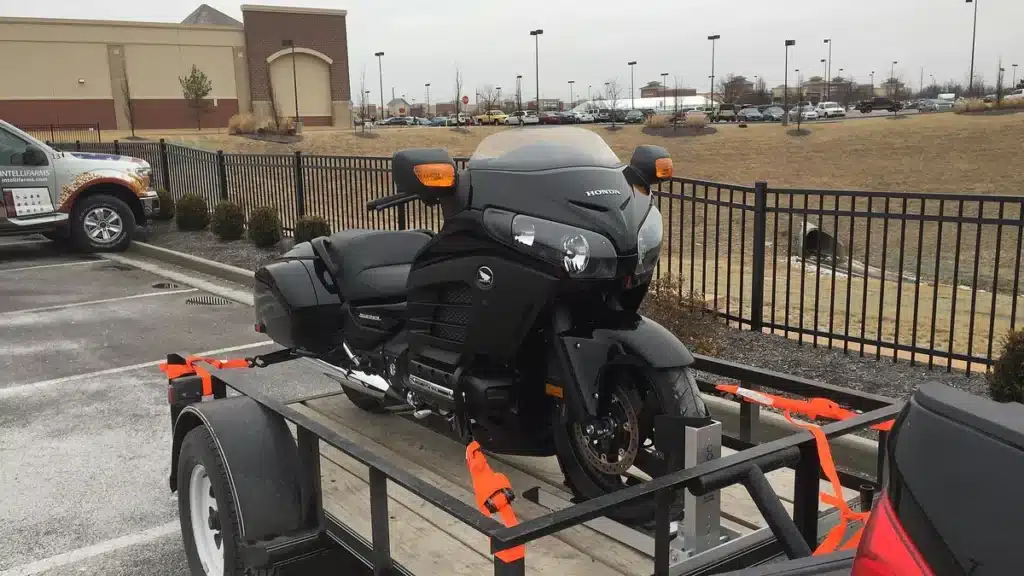
At a Glance
A motorcycle is not a small car, and a company that treats it like one will damage it. Bikes need a chock, soft straps and a driver who knows where the tie-down points are.
Our published rates start at around $299 for short-distance moves on open trailers, and long hauls average about $1.50 per mile. Every shipment carries $100K cargo insurance.
What you will learn:
- What separates real motorcycle freight from car transport
- The four transport methods and which suits your bike
- How to verify a carrier before you hand over the keys
Written by Daniela Quinchia —
Reviewed by
Last updated: 20 September 2026. This guide follows our editorial policy: every figure is either sourced to a named authority or flagged for verification.
What makes motorcycle shipping different?
A motorcycle has two contact points with the ground and no structural frame designed to be strapped down by an untrained hand. That is the entire difference, and it is why a general auto transporter is not automatically the right choice.
A car sits on four wheels and can be secured by the tires alone. A bike has to be held upright, which means a front wheel chock and straps that compress the suspension to a controlled degree. Get that wrong and you arrive with a bent fork, a scratched tank or a bike that shifted in transit.
Our published rates start at around $299 for short-distance moves on open trailers, with longer hauls averaging about $1.50 per mile. Every shipment in our network carries $100K cargo insurance.
The rest of this guide is about separating carriers who know this from carriers who will learn it on your bike.
The four transport methods
Method drives both cost and protection, and most riders over-buy.
| Method | Protection | Best for |
|---|---|---|
| Open trailer | Secured, exposed to weather | Daily riders, commuter bikes, short hauls from $299 |
| Enclosed trailer | Covered, out of public view | Touring bikes, customs, anything with paint you care about |
| Crated | Boxed and palletised | Rare, vintage or international shipments |
| Container | Sealed, multi-unit | Island routes and overseas moves |
Crating sounds like maximum safety and is usually unnecessary domestically. It adds cost, handling steps and disassembly, and an enclosed trailer with correct tie-downs achieves most of the same outcome.
See our motorcycle shipping service page for how we match method to bike.
The securing question that filters companies fast
Ask one question before you ask about price: “How will you secure my bike?” The answer sorts serious carriers from the rest in about ten seconds.
What you want to hear:
- A front wheel chock that holds the bike upright without a person holding it.
- Soft straps or tie-downs at the suspension and frame, not over the bodywork or across the handlebars in a way that crushes the forks.
- Controlled suspension compression — enough to hold, not enough to damage seals over hundreds of miles.
- A plan for loading, including whether the bike is ridden up or winched.
Warning signs: vague answers, “we strap everything the same way,” or an assumption that you will load it yourself. If they cannot describe their method, they do not have one.
Verifying the company is real
Federal registration is public, free to check, and the single most useful filter available to you.
Brokers arranging motorcycle transport must hold $75,000 in financial security — a surety bond or trust fund — under 49 CFR 387.307, filed with the Federal Motor Carrier Safety Administration. That filing is on record.
A short checklist before you pay anything:
- Get the MC and USDOT numbers and confirm the operating authority is active.
- Confirm cargo insurance and what it actually covers for a motorcycle specifically.
- Ask whether they broker or haul. Both are legitimate; you just want to know.
- Refuse large upfront deposits before a carrier is assigned. We charge nothing until dispatch.
Our guide on transport scam warning signs covers the patterns worth walking away from.
Preparing the bike
Preparation takes half an hour and prevents most disputes.
- Wash it. Not vanity — you cannot document existing scratches under road grime.
- Photograph every panel, the tank, the pipes and both wheels, timestamped.
- Leave about a quarter tank of fuel. Enough to load, not enough to add weight or risk.
- Disable the alarm or provide the fob. An alarm cycling for two days kills a battery.
- Remove or secure loose parts — mirrors, screens, luggage, aftermarket accessories.
- Fold the mirrors and note any fluid leaks on the Bill of Lading.
Document condition at pickup and again at delivery before you sign. That comparison is the basis of any claim.
Questions worth asking before you book
Six questions that surface almost every problem in advance.
- How will you secure the bike? Specifics, not reassurance.
- Is my bike on an open or enclosed trailer, and can I choose?
- What exactly does the cargo insurance cover on a motorcycle, and what is excluded?
- When do I pay, and what happens if the price changes?
- Who handles loading — the driver, or me?
- What is the pickup window, and what widens it?
A company that answers all six plainly is one you can work with. One that deflects on securing or insurance is telling you something.
Explore the full vehicle transport toolkit
- Motorcycle shipping — Our motorcycle transport service and rates.
- How to choose a motorcycle shipping company — Vetting carriers for two-wheel freight.
- RV relocation — Oversized vehicle transport.
- Shipping electric vehicles — What changes with a battery pack.
- Classic car shipping mistakes — Protecting a collector vehicle in transit.
- How much does car shipping cost — Every factor that moves the number.
- How to prepare a car for transport — Pre-pickup checklist.
- Spotting transport scams — Verify a broker before you pay anything.
Frequently asked questions
How much does it cost to ship a motorcycle?
Short-distance moves on open trailers start around $299. Longer hauls average about $1.50 per mile. Crated and enclosed transport cost more because the equipment carries fewer units and requires more handling.
Is it safe to ship a motorcycle?
Yes, with a carrier that handles bikes specifically. The risk is not the road – it is improper securing. A motorcycle needs a front wheel chock and soft straps at suspension-aware points, not ratchet straps over the bodywork.
Do I need to crate my motorcycle?
Only for high-value, rare or international shipments. Crating adds cost and handling time. For most domestic moves an enclosed trailer with proper tie-downs gives comparable protection at lower cost.
Should I drain the fuel before shipping?
Leave about a quarter tank. Carriers need enough to load and unload under power but not a full tank adding weight and fire risk. Disconnect or disable the alarm if it can trigger in transit.
Can you ship a motorcycle that does not run?
Yes, but say so when booking. A non-running bike cannot be ridden onto the trailer and needs a winch, ramp and often a second person. It changes which carriers can accept the load.
How long does motorcycle shipping take?
The same two clocks as any vehicle: waiting for a carrier that runs your lane, then the drive itself. Bike-specific carriers are a smaller pool than car carriers, so the matching wait can run longer.
Key takeaways
- Ask how they secure the bike before you ask the price. Chock, soft straps and suspension-aware tie-downs are the minimum.
- Short hauls start around $299; long hauls run about $1.50 per mile. A quote far below that is a load nobody will pick up.
- Verify federal authority before paying. Broker financial security filings are public.
Get your motorcycle quote — or see our motorcycle shipping service details.
References
- Broker Registration. Federal Motor Carrier Safety Administration.
- 49 CFR 387.307 – Property broker surety bond or trust fund. Electronic Code of Federal Regulations.
- Hours of Service Regulations. Federal Motor Carrier Safety Administration.
Featured image: MickOhrberg via Wikimedia Commons, licensed under CC BY-SA 4.0.