
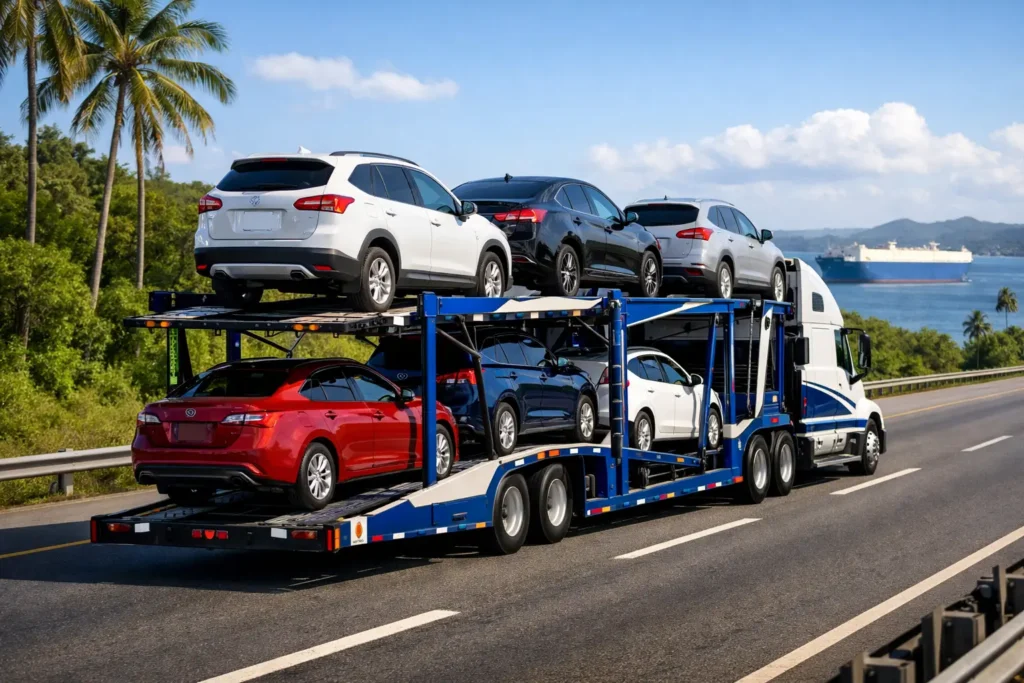
If you need puerto rico car shipping, the biggest stress usually starts before the vehicle ever moves. People want clear answers on timing, port logistics, paperwork, and cost – without getting buried in vague promises. That is exactly where a professional, fully insured transport process matters.
Shipping a vehicle to or from Puerto Rico is different from a standard mainland route because part of the trip involves ocean transport and port coordination. That does not make it complicated when the shipment is managed correctly. It simply means the details matter more, from pickup scheduling to required documents to how the vehicle is released at the port.
How puerto rico car shipping works
Most Puerto Rico vehicle moves involve two phases. First, the vehicle is transported over land to the departure port or picked up near the arrival port for final delivery. Second, it is moved by vessel between Puerto Rico and the mainland.
Depending on the route, your vehicle may move from a home, business, dealership, auction yard, or military-related location to the port. On the receiving side, delivery may be arranged from the port to your address when available, or the vehicle may be released for pickup based on the shipment plan. The exact process depends on your origin, destination, vehicle type, and port requirements.
For many customers, the best experience comes from working with one transport coordinator who manages the entire shipment instead of trying to piece together inland and port logistics separately. That reduces delays, confusion, and missed handoffs.
What affects Puerto Rico car shipping cost
Price is one of the first questions people ask, and the honest answer is that it depends on the shipment details. Anyone giving a flat number without asking questions is skipping the factors that actually affect your move.
Route is a major factor. A vehicle shipping from Florida to Puerto Rico usually follows a different inland path and port process than one coming from Texas, California, or the Northeast. Vehicle size also matters. A standard sedan takes up less space and is easier to load than a large SUV, lifted truck, van, or oversized vehicle.
Condition matters too. If the car is inoperable, salvage, or unable to roll, special equipment may be needed for loading and unloading. That changes both planning and cost. Open or enclosed inland transport can also affect the quote before or after the ocean portion of the move.
Seasonality plays a role as well. Military PCS periods, college schedules, and high-demand relocation seasons can tighten carrier availability. Expedited service, when available, may also affect pricing. The goal is not to chase the cheapest number. It is to secure reliable, fully insured transport with realistic scheduling and clear communication.
Port logistics matter more than most people expect
The port side of Puerto Rico car shipping is where experience shows. This is the part customers often underestimate because they focus only on pickup and delivery dates.
Port shipments usually require specific documentation, naming consistency, and timing windows. If names do not match, paperwork is incomplete, or release procedures are misunderstood, delays can happen even when the vehicle has already arrived. That is why responsive coordination matters.
A strong transport partner helps confirm what documents are needed before the move starts, how the vehicle should be prepared for port acceptance, and what to expect once it reaches Puerto Rico or the mainland. That guidance saves time and cuts down on avoidable surprises.
Choosing the right transport setup
Not every shipment needs the same service level. For many standard vehicles, open transport for the inland leg is the practical choice because it is efficient and cost-effective. For luxury, exotic, classic, or collector vehicles, enclosed transport may make more sense during the mainland portion of the move.
If the vehicle is non-running, rebuilt, or salvage, you need a company that is comfortable coordinating those moves and understands how to handle special loading requirements. Auction purchases add another layer. Vehicles from Copart, IAA, Manheim, ACV, or ADESA often require fast communication, lot release coordination, and accurate pickup details.
This is also where commercial clients, dealerships, and fleet operators benefit from a more structured transport process. When multiple units, strict release protocols, or business deadlines are involved, consistency matters as much as transit itself.
What documents are usually needed
Documentation can vary by route, ownership situation, and port requirements, but in general, customers should expect to provide proof of ownership or authorization to ship the vehicle, a valid photo ID, and accurate vehicle information. Financed or newly purchased vehicles may require additional verification depending on the situation.
The key is accuracy. The name on the booking should align with the name on the supporting documents whenever required. Vehicle details should match the VIN and registration records. If the car is being picked up from an auction, dealership, or repair facility, release information needs to be correct before dispatch is sent.
A reliable coordinator will tell you what is needed early, not the day before pickup.
Preparing your vehicle for shipping
Preparation is straightforward, but it should not be rushed. The vehicle should be reasonably clean so its condition can be documented at pickup. Personal items should generally be removed unless your transport coordinator gives specific guidance on what is allowed. Toll tags, parking passes, and loose accessories should also be taken out when applicable.
The vehicle should have enough battery power and be in a condition that matches what was disclosed at booking. If it does not run, that needs to be stated upfront so the proper equipment is assigned. Last-minute surprises at pickup can lead to delays or rescheduling.
It also helps to keep a copy of your booking details, contact names, and port instructions in one place. Shipping goes much more smoothly when customers know exactly who to call and what the next step is.
Who uses Puerto Rico vehicle shipping services
This service is not just for one type of customer. Military members relocating under PCS orders often need dependable scheduling and clear communication. College students and families may want to avoid long mainland driving before port drop-off. Seniors and seasonal travelers often prioritize convenience and reduced stress.
There is also strong demand from online buyers and sellers, dealerships, corporate clients, and auction customers. Some are shipping a daily driver. Others are moving a high-value vehicle, a motorcycle, or a non-running unit that needs extra handling. The shipment may look different, but the need is the same – safe, organized transport managed by professionals.
What to expect from a professional transport company
A trustworthy auto transport partner should make the process feel controlled, not confusing. That starts with a clear quote based on real shipment details. It continues with transparent communication, dispatch coordination, insured transport, and realistic expectations around timing.
You should also expect compliance and credibility. FMCSA licensing, vetted carriers, and responsive customer support are not extras in this industry. They are part of what protects your shipment and your peace of mind.
For Puerto Rico routes especially, communication matters at every handoff. Customers need to know when the vehicle is scheduled, what phase of the move it is in, and what action is required from them, if any. Being available before, during, and after transport is part of real service.
When timing can change
Transit schedules for Puerto Rico shipments can be affected by port operations, vessel schedules, route demand, weather, and documentation timing. That does not mean shipping is unpredictable. It means the process needs to be handled with realistic planning.
The best approach is to book early when possible and work with a team that gives honest updates instead of overpromising. Customers are usually much more comfortable with a shipment when they understand the moving parts upfront.
That matters even more for time-sensitive moves like military relocations, auction releases, and college-related deadlines. Good planning does not eliminate every variable, but it does reduce unnecessary risk.
Why experienced coordination makes a difference
Puerto Rico vehicle transport is not hard when the right team is managing it, but it does reward experience. Inland pickup, port handling, ocean transit, release procedures, and final delivery all need to line up. If one step is missed, the whole move feels harder than it needs to be.
That is why many customers choose a company that coordinates the full shipment from start to finish. DQ Trans LLC helps simplify that process with fully insured transport, FMCSA-compliant service, and responsive support built around real-world shipping needs.
If you are planning puerto rico car shipping, the smartest next step is not guessing your way through ports, paperwork, and scheduling. It is getting a clear plan built around your vehicle, your route, and the level of service that fits your move.