
Quick answer
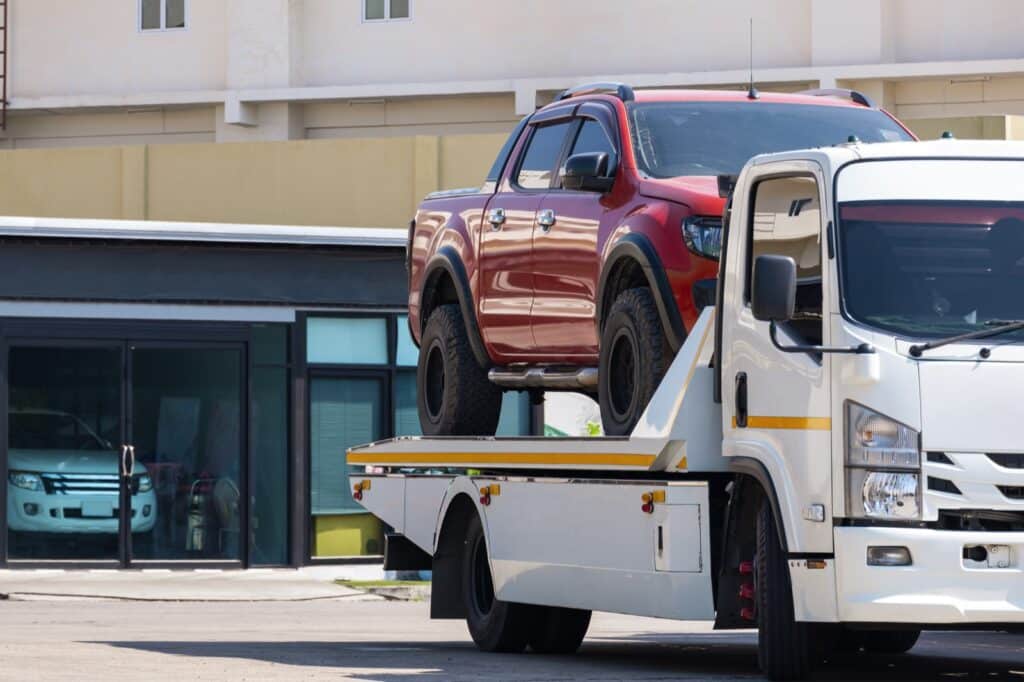
The cost to ship a truck depends on distance, truck size and trailer type, and pickups usually cost more than sedans because they take more deck space and weight.
For a standard pickup on an open carrier, one transport company lists about $750 to $1,500 for 500 to 2,000 miles and $1,500 to $1,800 beyond 2,000 miles (A1 Auto Transport).
You found the right truck three states away, or you are moving and the pickup cannot follow you on its own. Driving it means fuel, hotels and days off work. Shipping it sounds simpler, but quotes for trucks swing more than quotes for cars.
Trucks keep getting bigger. Heavy-duty models, lift kits and electric pickups with heavy battery packs all change how a carrier fits and prices the load.
This guide breaks down the cost to ship a truck by distance and size class, explains when a lifted or dually truck needs special equipment, and covers what can stay in the bed.
What is the cost to ship a truck?
Shipping a standard pickup on an open carrier typically costs about $500 to $750 under 500 miles, $750 to $1,500 for 500 to 2,000 miles, and $1,500 to $1,800 for longer cross-country trips. Size, season and pickup location move the final price.
| Distance | Typical open-carrier price (standard pickup) | Typical transit after loading |
|---|---|---|
| Under 500 miles | $500 to $750 | 1 to 3 days |
| 500 to 2,000 miles | $750 to $1,500 | 2 to 8 days |
| Over 2,000 miles | $1,500 to $1,800 | 7 to 10 days |
Treat those published figures as a starting point. Price per mile also falls as distance grows. A national marketplace reports truck transport averages of $4.15 per mile under 100 miles and $1.40 per mile under 1,000 miles (uShip). So it costs less per mile to ship a truck across country than across your state.
For your route, run the trip through our car shipping cost calculator, and see how much car shipping costs for factors that apply to every vehicle. Next, why a pickup almost always prices above a sedan.
Why does a pickup cost more to ship than a sedan?
A pickup costs more to ship because it uses more deck length and more of the carrier’s weight allowance, so the driver can fit fewer vehicles on the trailer. One broker’s 12-month data for a Maryland market shows pickups averaging $284 more than sedans.
That figure comes from Sherpa’s route data for Hagerstown, Maryland, where SUVs averaged only $28 more than sedans (Sherpa Auto Transport). The gap reflects how a carrier, the company that physically moves your vehicle, fills a load:
- Length. A crew-cab, long-bed truck can take the space of a sedan and a half.
- Weight. Every truck reduces how many other vehicles the rig can legally carry.
- Height. Tall trucks fit only certain deck positions.
Our open auto transport service is the most affordable way to move most stock pickups. Size class is the next big variable.
How does truck size change the shipping price?
Truck shipping prices rise with each size class, from midsize pickups at the low end to heavy-duty, dually and lifted trucks at the top, because larger classes take more space, weight and special handling.
| Size class | Examples | Relative cost | Carrier fit |
|---|---|---|---|
| Midsize pickup | Tacoma, Ranger, Colorado | Close to a large SUV | Most open-carrier spots |
| Full-size half-ton | F-150, Silverado 1500, Ram 1500 | Moderately higher | Most spots; long beds limit options |
| Heavy-duty / dually | F-250/350, Silverado 2500/3500, Ram 2500/3500 | Higher | Weight and width limit spots; some need a flatbed |
| Lifted / modified | Lift kits, oversized tires, racks | Highest, often custom quote | Specific deck spot, step-deck or flatbed |
Ocean carriers price by size too. TOTE Maritime rates most pickups as “medium” (under 84 inches tall) and large or modified pickups as “large” (under 102 inches) (TOTE Maritime).
When you request a quote, share cab style, bed length and modifications. DQ Trans LLC uses those details to match your truck with a carrier that has the right spot open. Trucks at the top of the table raise a bigger question: can they fit at all?
Can a lifted or dually truck go on a regular car carrier?
Sometimes, but lifted and dually trucks often need a specific deck position or a flatbed, because most states cap loaded vehicle height between 13 feet 6 inches and 14 feet. There is no federal height limit for commercial vehicles, so states set it (FHWA).
A two-level car hauler already sits close to that limit. A lifted truck up top can push the load over it, and the lower deck has its own ceiling. Duallys add rear width some decks cannot handle. Before you book lifted truck shipping or dually truck transport, follow these steps:
- Measure overall height from the ground to the highest point, including light bars and racks.
- Measure width across the rear duals or fender flares.
- Record length and modifications, including hitch, winch, lift height and tire size.
- Ask about equipment. Very large trucks may need a flatbed, step-deck or lowboy trailer (A1 Auto Transport).
For a show truck or a build worth protecting, compare options in our enclosed vs. open car shipping guide or ask about enclosed auto transport, keeping in mind that enclosed trailers have their own height limits. Once the truck fits, the bed needs attention.
What can you leave in the truck bed during shipping?
Plan to ship your truck with an empty bed, because loose cargo can shift, adds weight and is usually not covered by the carrier’s cargo insurance. Permanently mounted equipment can stay if it is secured and noted on the bill of lading.
A bill of lading is the receipt and inspection report signed at pickup and delivery. Federal law requires carriers to issue one (49 U.S.C. 14706). Use this checklist:
- Remove tools, coolers, spare parts, ladders and anything loose.
- Remove or bolt down toolboxes. A bolted box that stays should be locked and empty.
- Latch tonneau covers and camper shells and check for loose panels.
- Leave about a quarter tank to keep weight down.
See our full guide to preparing a car for transport for the cab and mechanical steps. Weight matters even more with electric pickups.
Do electric pickup trucks cost more to ship?
Electric pickups often cost more to ship than gas pickups of similar size, because heavy battery packs use more of a carrier’s weight capacity. The GMC Hummer EV pickup Edition 1 weighs as much as 9,063 pounds, according to its EPA filing (InsideEVs).
What to expect with an EV truck:
- Fewer spots. Drivers balance axle weights, so a very heavy truck limits the rest of the load.
- Charge level. Carriers usually ask for a partial charge, not full and not empty.
- Ocean limits. TOTE Maritime stopped accepting EVs and plug-in hybrids on August 1, 2025 (TOTE Maritime).
Our guide to shipping electric vehicles safely covers charging and paperwork.
Ready to move your pickup? DQ Trans LLC books open auto transport for stock trucks and enclosed auto transport for custom builds, with carriers matched to your truck’s size and weight.
FAQ
Should I ship my truck on an open or enclosed carrier?
Open transport suits most stock pickups and costs less. Enclosed transport makes sense for show trucks, restored classics or expensive builds that need protection from weather and road debris. Check height first, because enclosed trailers also have interior clearance limits that lifted trucks may exceed.
Can I ship a truck that does not run?
Yes. Tell your broker the truck is inoperable and whether it rolls, steers and brakes. The carrier then sends a truck with a winch. One transport company lists about $150 to $400 extra for winch or rollback loading, depending on the route and vehicle.
How long does it take to ship a truck across country?
Coast-to-coast truck transport usually takes about 7 to 10 days once the truck is loaded, plus a few days for carrier assignment. Heavy-duty, lifted or dually trucks can take longer to schedule because fewer carriers have a suitable open spot on that route.
Can I ship a truck with a camper shell or tonneau cover?
Usually yes, if the shell or cover is firmly attached and latched. Include the shell in your height measurement and note it on the bill of lading. Remove anything stored under it, because loose cargo is usually not covered in transit.
Can I ship a truck that is towing a trailer?
No, a car carrier will not haul your truck with a trailer attached. The trailer needs its own shipment on a flatbed or as freight. Ask for both quotes together so pickup and delivery can be coordinated, and remove any hitch-mounted accessories that add length.
Summary
- The cost to ship a truck on an open carrier typically runs about $750 to $1,500 for 500 to 2,000 miles, with cross-country trips higher in total but lower per mile.
- Pickups cost more than sedans because of length, weight and height, and heavy-duty, dually, lifted and electric trucks cost the most.
- Measure height and width before booking, ship with an empty bed and record any mounted equipment on the bill of lading.
Shipping a pickup? Get a truck shipping quote, or share your truck and route in the comments. Next, read how much car shipping costs.
References
- How Much Does It Cost to Ship a Truck? (price bands, transit times, inoperable loading). A1 Auto Transport.
- Truck Shipping and Transport (average cost per mile). uShip.
- Hagerstown, MD Car Shipping (price by vehicle type, 12-month shipment data). Sherpa Auto Transport.
- Vehicles, RVs, Boats: size classes and EV policy. TOTE Maritime Alaska.
- Federal Size Regulations for Commercial Motor Vehicles (state height limits). Federal Highway Administration.
- 49 U.S.C. 14706: Liability of carriers under receipts and bills of lading. Legal Information Institute, Cornell Law School.
- 2022 GMC Hummer EV Pickup weight and efficiency specs (EPA filing). InsideEVs.
Featured image: Envato Elements, licensed for DQ Trans LLC.