
Quick answer
The cost to ship a classic car depends mostly on open versus enclosed transport, distance, the car’s condition and how much special handling it needs.
For an operable classic, one national broker estimates $800 to $1,500 on an open carrier and $1,100 to $2,000 on an enclosed carrier (Sherpa Auto Transport).
You have spent years and serious money on your classic. Handing the keys to a stranger with a trailer feels like a risk, and the quotes you get can differ by hundreds of dollars for the same route.
Collector car events keep the market busy. Big auctions and concours shows pull cars across the country at the same time each year, and enclosed trailer space fills fast around them.
This guide breaks down the cost to ship a classic car: open and enclosed price ranges, when a liftgate is worth it, how insurance really works and how timing changes your quote. You will know which extras protect your car and which ones you can skip.
What is the cost to ship a classic car?
Shipping an operable classic car typically costs about $800 to $1,500 on an open carrier and $1,100 to $2,000 on an enclosed carrier, with expedited pickup adding $200 to $500. Distance, size and season move your price within those ranges.
| Option | Typical classic car shipping cost | Best for |
|---|---|---|
| Open carrier | $800 to $1,500 | Drivers and project cars |
| Enclosed carrier | $1,100 to $2,000 | Restored, rare or high-value cars |
| Expedited pickup | Add $200 to $500 | Auction or show deadlines |
Those ranges are estimates, not guaranteed prices (Sherpa Auto Transport). Route averages from another broker show how distance matters: about $2,029 from Philadelphia to San Francisco, $1,219 from Miami to Dallas and $1,009 from New York City to Chicago (SGT Auto Transport).
If you are asking how much to ship a vintage car on your own route, start with our car shipping cost calculator or the classic car transport page. The biggest price lever is the trailer type.
Why does enclosed classic car transport cost more?
Enclosed classic car transport costs more because covered trailers carry fewer cars, use specialized loading gear and are in higher demand from collectors. In exchange, the car is shielded from weather, road debris and public view.
| Trailer type | Relative cost | What you get |
|---|---|---|
| Open multi-car | Lowest | Exposed to weather and debris |
| Enclosed multi-car | Higher | Full cover, shared with other vehicles |
| Enclosed single-car or two-car | Highest | Fewer stops, direct routing, more attention |
A carrier is the trucking company that moves your car, while a broker like DQ Trans LLC finds and vets that carrier for you. Each empty slot on an enclosed trailer costs the carrier money, so those slots are priced higher. Single-car enclosed service costs the most because one customer pays for most of the trip.
Our enclosed vs. open car shipping guide compares both in detail, and our enclosed auto transport service covers collector cars. Within enclosed service, loading equipment is the next choice.
Does a low classic car need a liftgate trailer?
A classic with low ground clearance, long overhangs or a fragile front spoiler often needs a liftgate trailer, which raises the car level instead of driving it up a steep ramp. Liftgate trailers are usually enclosed and can cost more.
Ramps can scrape oil pans, exhaust and chrome bumpers. Tell your broker the car’s ride height, front overhang and any aftermarket lowering. Securing method matters just as much:
- Soft-tie straps are fabric loops wrapped through the wheels or around solid points, used in place of metal hooks. They keep hardware away from paint and chrome.
- Wheel straps (wheel nets or baskets) wrap over the tire tread and are also common for collector cars.
- Chains and hooks attach to frame or suspension points. They are standard on many open carriers but less suited to delicate classics.
In the soft-tie vs. wheel straps debate, both are gentle options. The key is avoiding chains and hooks on original parts. Ask the carrier which method it uses before you book. Our classic car shipping mistakes guide lists more questions. Protection on the trailer also connects to protection on paper.
How does classic car transport insurance work?
The carrier’s cargo insurance covers damage while it has your car, but its limit may be lower than a valuable classic is worth, so your own agreed-value policy matters. Check both before pickup.
Federal law makes carriers liable for actual loss or injury to property they transport and bars claim deadlines shorter than 9 months (49 U.S.C. 14706). Cargo limits vary. One broker requires carriers to carry at least $100,000 in cargo insurance (Sherpa Auto Transport), which may not cover a six-figure classic.
Agreed value coverage is based on the car’s proven value as set by you and your insurer, while actual cash value pays what the car was worth just before the loss (Hagerty). Follow these steps:
- Request the carrier’s certificate of insurance and read the cargo limit.
- Compare it with your car’s appraised value.
- Call your classic insurer to confirm coverage during transport.
- Photograph the car and record its condition on the bill of lading, the signed inspection receipt.
Our car shipping insurance guide explains claims in more detail. Condition affects price as well as coverage.
Do inoperable classic cars cost more to ship?
Yes, a non-running classic usually costs more to ship because it must be winched onto the trailer, which takes extra time and equipment. One transport company lists about $150 to $400 extra for winch or rollback loading.
That add-on comes from a published vehicle shipping guide (A1 Auto Transport). Barn finds and stalled restorations are common in the classic world. To keep the cost predictable:
- State whether it rolls, steers and brakes. A car that does not roll needs more equipment.
- Check the tires. Flat or cracked tires make winching harder.
- Note missing parts such as glass, bumpers or an engine.
- Plan pickup access. Barns and narrow drives may require a smaller truck.
Read can you ship an inoperable vehicle for more on loading. The last major factor is the calendar.
When is it most expensive to ship a classic car?
Classic car shipping costs tend to rise in summer, over holidays and in January, and around major collector auctions and shows when enclosed trailer space is in demand. Booking early is the simplest way to save.
That seasonal pattern is noted in one broker’s cost guide (SGT Auto Transport). Two major 2027 events to plan around:
- Barrett-Jackson Scottsdale: January 23 to 31, 2027, at WestWorld of Scottsdale, Arizona (Experience Scottsdale).
- Pebble Beach Concours d’Elegance: Sunday, August 15, 2027, at The Lodge at Pebble Beach, California (Pebble Beach Concours).
For auction buys, book transport as soon as you win the bid. Our auction vehicle pickup guide covers release forms and deadlines. DQ Trans LLC can schedule enclosed pickups from auction lots and shows.
Ready to move your classic? Our classic car transport service books enclosed carriers with soft-tie and liftgate options matched to your car.
FAQ
Is it safe to ship a classic car on an open trailer?
For a driver-quality classic, open transport is generally safe and costs less. The trade-off is exposure to rain, sun, road grit and possible debris. For fresh paint, rare models or concours cars, most owners choose enclosed transport for full cover and specialized loading.
Should I get an appraisal before shipping a classic car?
A recent appraisal helps. It documents the car’s value if you need to file a claim and lets you compare that value with the carrier’s cargo limit. It also supports an agreed-value policy with your insurer, which is common for collector cars.
Can I put spare parts inside my classic during transport?
Ask first. Many carriers prohibit loose items, and cargo insurance usually does not cover personal property or parts. If the carrier allows a few items, secure them in the trunk, list them on the bill of lading and keep valuable parts out of the car.
How much fuel should a classic car have for shipping?
About a quarter tank is standard for ground transport. That is enough to drive the car on and off the trailer without adding extra weight. Check older fuel lines and the carburetor for leaks first, because drivers can refuse a car that is dripping fluids.
Do I need to be there when my classic is picked up?
You or a trusted person should be present. Someone needs to walk around the car with the driver, agree on its condition, sign the bill of lading and hand over the keys. Bring your photos so any existing marks are recorded accurately.
Summary
- The cost to ship a classic car typically runs about $800 to $1,500 open and $1,100 to $2,000 enclosed, with expedited pickup adding more.
- Liftgate trailers, soft-tie straps and single-car enclosed service add cost but protect low, fragile or high-value cars.
- Check the carrier’s cargo limit against your car’s value, confirm agreed-value coverage and book early around auctions and shows.
Shipping a collector car? Get a classic car shipping quote, or share your car and route in the comments. Next, read 7 classic car shipping mistakes to avoid.
References
- Classic Car Transport guide (open and enclosed cost ranges, carrier insurance minimums). Sherpa Auto Transport.
- What Does It Cost to Ship a Classic Car? (route averages and seasonality). SGT Auto Transport.
- 49 U.S.C. 14706: Liability of carriers under receipts and bills of lading. Legal Information Institute, Cornell Law School.
- What is agreed value vs. guaranteed value insurance? Hagerty.
- Vehicle shipping cost guide (winch and rollback loading add-on). A1 Auto Transport.
- Barrett-Jackson 2027 Scottsdale Auction dates and venue. Experience Scottsdale.
- Pebble Beach Concours d’Elegance 2027 date. Pebble Beach Concours d’Elegance.
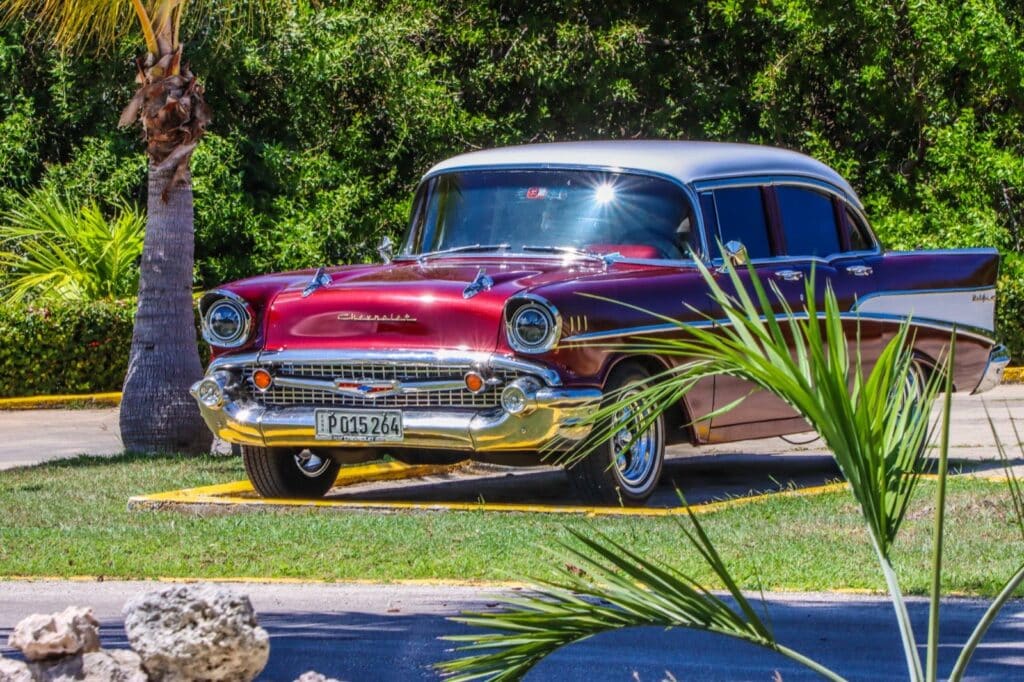
Featured image: Envato Elements, licensed for DQ Trans LLC.